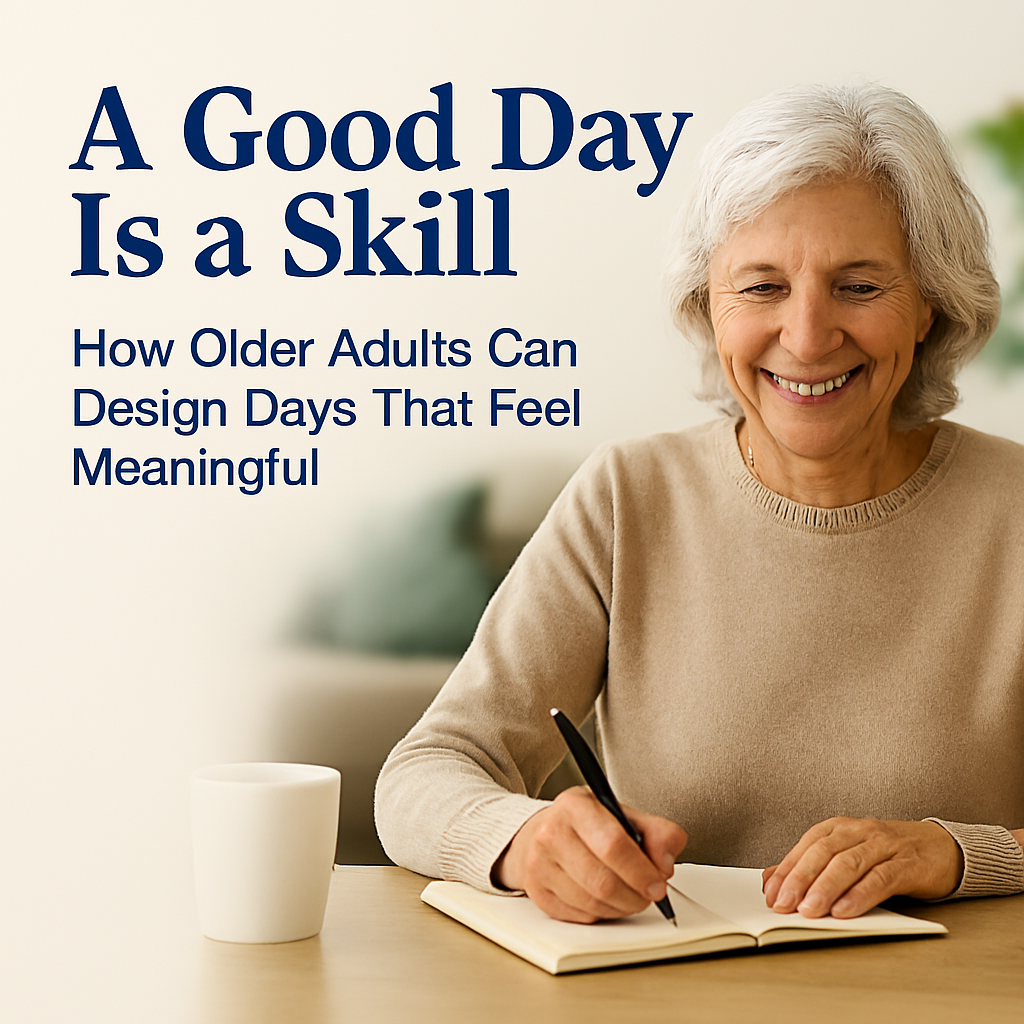
For many older adults, the days don’t feel bad, they just feel long. After retirement, after children grow up, after routines loosen, time opens up in a way that can feel freeing, and strangely empty at the same time. The calendar clears, but no one hands you a new structure to replace what’s gone. What often gets mistaken for boredom or laziness is something else entirely, a lack of intentional design. The truth is, a good day doesn’t happen by accident. It’s a skill, and like any skill, it can be learned.
Why Meaningful Days Matter More Than “Busy” Ones
We spend so much time talking about healthy aging, years added to life, steps walked, numbers tracked. But life isn’t lived in years. It’s lived in days. A meaningful day doesn’t have to be full. It just has to feel worth waking up for.
Research consistently shows that older adults who experience:
- regular social connection
- a sense of purpose
- gentle physical movement
- moments of reflection
report higher happiness, better mental health, and even improved physical well-being. But here’s the key insight, these don’t come from big goals. They come from daily anchors.
Reframing the Question
Instead of asking,
“What should I be doing at this stage of life?”
Try asking,
“What would make today feel like a good day?”
That shift alone changes everything.
The Four Anchors of a Good Day
At Agefully, we think of a meaningful day as having a few simple anchors, not obligations, not pressure, just touchpoints that give the day shape.
- Connect
One real interaction. A phone call, a coffee chat, a shared laugh, a message that goes beyond small talk. Connection doesn’t need to be constant, it just needs to be intentional. - Move
Movement doesn’t have to mean exercise. It can be a walk, stretching, gardening, dancing in the kitchen. Movement reminds us we’re still in our bodies, not just observing life from the sidelines. - Create
Creation isn’t about talent, it’s about expression. Writing, learning something new, cooking, photography, problem-solving, curiosity. Creating keeps the mind awake and engaged with the world. - Reflect
A quiet moment to notice the day. What felt good? What surprised you? What are you grateful for? Reflection turns ordinary moments into meaningful ones.
What This Looks Like in Real Life
A good day doesn’t look the same for everyone. For one person, it might mean:
- a morning walk
- an afternoon coffee chat
- reading before bed
For another:
- volunteering
- learning a new skill
- journaling in the evening
The goal isn’t perfection. It’s presence. Even one anchor can change how a day feels. Two can change a week. Over time, they change how life feels.
Designing Tomorrow, Starting Today
The most empowering thing about this approach is that it puts control back where it belongs, with you. You don’t need to wait for motivation. You don’t need a packed schedule. You don’t need to “find your purpose” all at once. You just need to design one good day, then repeat.
At Agefully, we believe aging isn’t about slowing down, it’s about choosing what matters. And the smallest choices, made daily, shape a life that feels connected, active, and deeply human.
So tonight, or tomorrow morning, ask yourself,
What would make today feel like a good day, for me?
Then start there.