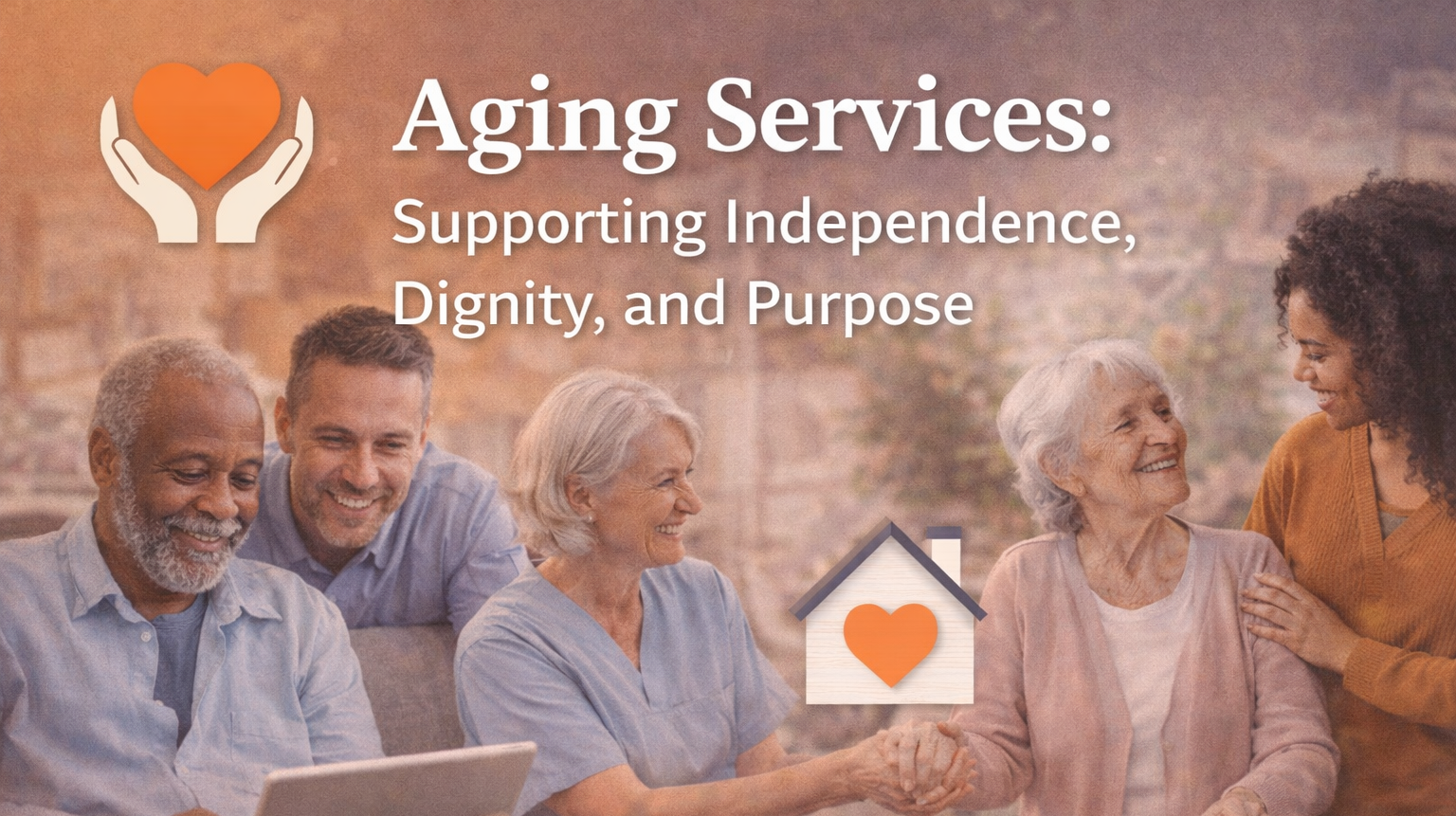
As populations age across the globe, aging services have become one of the most essential pillars of modern healthcare and community infrastructure. But aging services are not just about medical care. They are about preserving independence, reinforcing dignity, and helping older adults live meaningful lives on their own terms.
For Agefully, the conversation around aging services is not only about support, it is about empowerment.
What Are Aging Services?
Aging services encompass a broad network of programs, organizations, and professionals dedicated to supporting older adults and their families. These services range from in-home assistance and transportation programs to adult day centers, senior centers, assisted living, memory care, and hospice.
According to gerontologist Dr. Robert Butler, who first coined the term “ageism,” aging should be viewed not as decline but as a stage of life that deserves structure, purpose, and respect. Aging services, at their best, reflect this philosophy by focusing on ability rather than limitation.
The Shift Toward Aging in Place
Research from AARP Public Policy Institute consistently shows that the vast majority of older adults prefer to age in place, remaining in their homes and communities as long as possible. Aging services have increasingly evolved to support this goal through:
- Home health care and personal care aides
- Meal delivery programs
- Transportation assistance
- Remote health monitoring
- Social engagement initiatives
The work of Dr. Atul Gawande, particularly in his book Being Mortal, highlights how quality of life often matters more than aggressive medical intervention. Aging services today reflect this shift, prioritizing autonomy and daily wellbeing.
The Role of Community-Based Services
Community-based aging services reduce isolation and improve mental health outcomes. Senior centers, adult education programs, and volunteer networks provide connection and routine.
Research by Dr. Laura Carstensen, founder of the Stanford Center on Longevity, demonstrates that social engagement and emotional wellbeing significantly influence health outcomes in later life. Programs that create daily structure and meaningful interaction are not luxuries, they are health interventions.
For many older adults, a weekly class, a daily check-in, or a shared meal can be the anchor that keeps life feeling purposeful.
Care Coordination and Navigation
One of the most complex challenges families face is navigating fragmented care systems. Aging services increasingly include care coordinators, geriatric care managers, and digital tools that help families organize appointments, medications, and long-term plans.
The National Institute on Aging emphasizes that coordinated care reduces hospitalizations and improves health outcomes. As healthcare becomes more complex, aging services must act as both guide and advocate.
Technology and the Future of Aging Services
Technology is reshaping how aging services are delivered. From AI-powered daily check-ins to telehealth visits and wearable monitoring devices, innovation is helping extend independence.
However, experts like Dr. Bill Thomas, founder of the Eden Alternative, remind us that technology should enhance human connection, not replace it. The most effective aging services blend digital tools with real human relationships.
The future lies in hybrid models, daily structure supported by smart systems, and compassionate human interaction.
A Holistic Vision of Aging
Aging services must move beyond crisis response. They must support:
- Physical health
- Cognitive stimulation
- Emotional wellbeing
- Social connection
- Sense of purpose
Healthy aging is not accidental. It is supported by intentional systems.
At Agefully, aging services represent more than infrastructure. They represent a promise, that growing older does not mean fading away. With the right support, structure, and community, later life can be rich with meaning, contribution, and identity.
Because aging well is not just about adding years to life. It is about adding life to years.