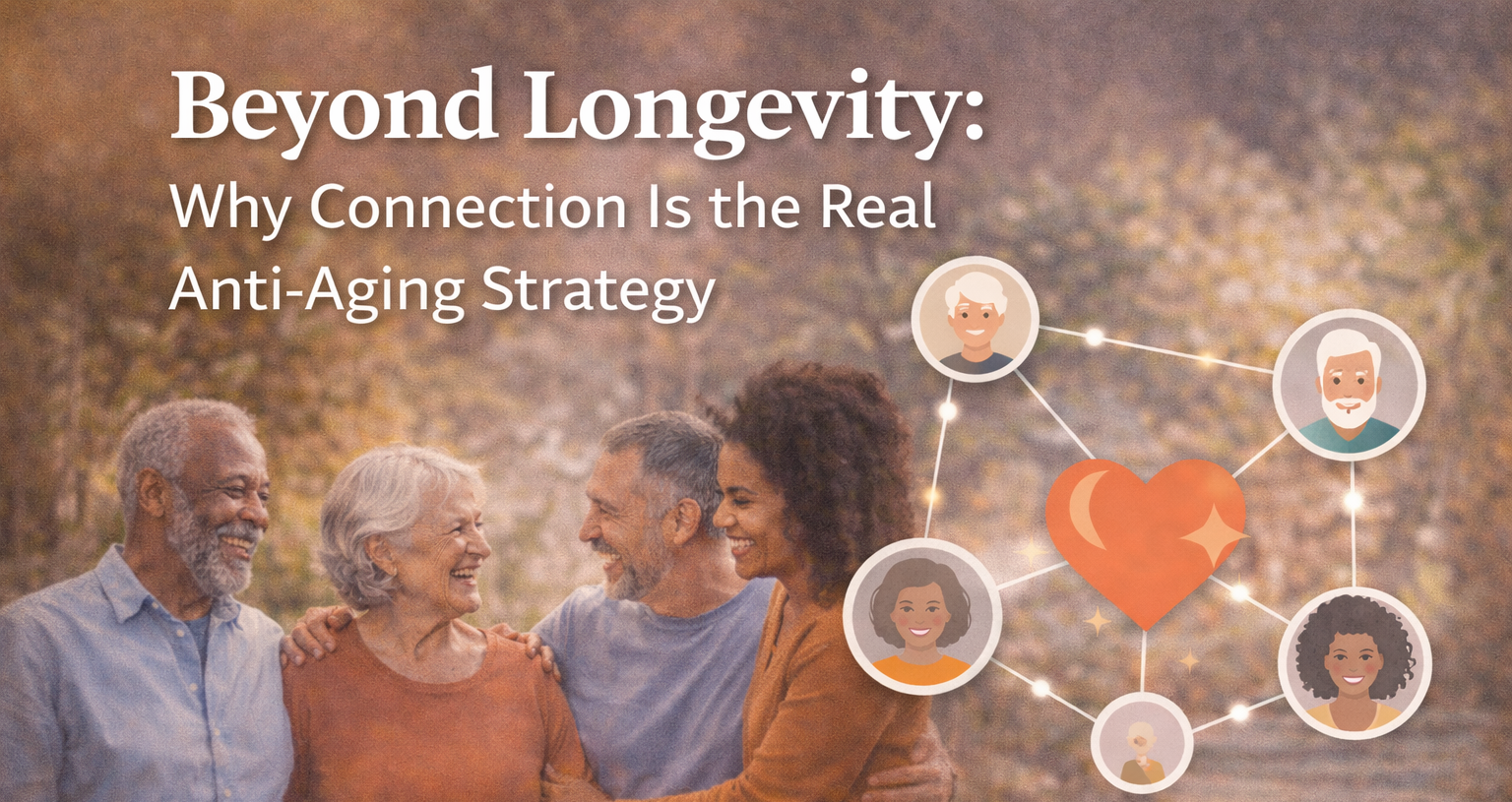
The anti-aging conversation has centered on biology: wrinkle reduction, hormone optimization, supplements, fitness routines, and longevity science. Living longer became the goal. But emerging research suggests that adding years to life is only part of the story. The real driver of healthy aging may not be found in a pill bottle or cosmetic treatment. It may be found in something far more fundamental: human connection.
Longevity without connection can feel empty. In contrast, meaningful relationships influence not only emotional wellbeing but also physical health, cognitive function, and even mortality risk. If we want to redefine anti-aging for the modern era, we must move beyond lifespan and focus on connection as a core strategy for vitality.
The Science Behind Social Connection and Aging
Groundbreaking research from Dr. Julianne Holt-Lunstad, a professor of psychology and neuroscience at Brigham Young University, has shown that social isolation and loneliness significantly increase the risk of premature death. Her large-scale meta-analyses suggest that lacking social connection can be as harmful as smoking 15 cigarettes a day.
Similarly, the decades-long Harvard Study of Adult Development, led in recent years by Dr. Robert Waldinger, found that the strongest predictor of long-term health and happiness was not cholesterol levels or wealth, but the quality of close relationships.
Connection influences aging in measurable ways:
- Reduced inflammation and stress hormones
- Improved immune system function
- Lower risk of cardiovascular disease
- Stronger cognitive resilience
- Reduced risk of depression and anxiety
In short, relationships regulate our nervous system and protect our health across the lifespan.
Loneliness: The Hidden Risk Factor
Loneliness has become a public health concern worldwide. Older adults are particularly vulnerable due to retirement, mobility limitations, loss of loved ones, and geographic distance from family.
Research by Dr. Louise Hawkley at the University of Chicago has demonstrated that chronic loneliness accelerates cognitive decline and increases the risk of Alzheimer’s disease. Social isolation also correlates with higher blood pressure, poor sleep quality, and decreased physical activity.
While longevity medicine focuses on biological aging markers, loneliness silently speeds up both physical and cognitive aging. Addressing it may be one of the most powerful anti-aging interventions available.
Connection as Preventative Care
What if anti-aging strategies prioritized daily connection just as much as diet and exercise?
Connection does not require large social circles. It requires meaningful interaction. This can include:
- Regular conversations with trusted friends
- Intergenerational relationships
- Community engagement
- Volunteer work
- Participation in local programs or senior centers
- Faith or cultural communities
Even small, consistent moments of interaction can shift health outcomes. Shared meals, walking groups, hobby classes, and neighborhood gatherings provide emotional stimulation and cognitive engagement.
Programs designed around social participation often show measurable improvements in mood, physical health, and cognitive functioning. Aging services that incorporate social support networks tend to see stronger outcomes than those focused solely on medical intervention.
Purpose, Identity, and Belonging
Connection also reinforces identity and purpose. As people age, roles often change. Careers end, children move away, and social circles shrink. Without intentional rebuilding of community, isolation can set in.
Studies in positive psychology emphasize that purpose is linked to longer life expectancy and lower risk of chronic illness. Relationships help maintain that sense of purpose. Being needed, heard, and valued strengthens emotional resilience.
This is particularly important in later life, when transitions can create vulnerability. Communities that foster belonging help older adults continue contributing their knowledge, experience, and leadership.
Rethinking Anti-Aging Culture
The anti-aging industry often frames aging as something to fight. But perhaps the more powerful shift is not resisting time, but strengthening connection throughout it.
Aging well is not simply about preserving youthfulness. It is about sustaining vitality. Vitality comes from movement, nutrition, mental stimulation, and most importantly, human connection.
Instead of asking, “How do we look younger?” the better question may be, “How do we stay connected?”
When connection becomes central to aging strategies, we see benefits that extend beyond the individual. Families become stronger. Communities become more resilient. Healthcare systems experience reduced strain.
Designing a Connected Future
To truly move beyond longevity, aging services, families, and communities must prioritize social health as much as physical health. This includes:
- Expanding community-based programs
- Encouraging intergenerational housing models
- Designing walkable, social neighborhoods
- Integrating social prescriptions into healthcare
- Supporting caregivers with community networks
Connection is not a luxury. It is a biological necessity.
Living longer matters. But living connected matters more.