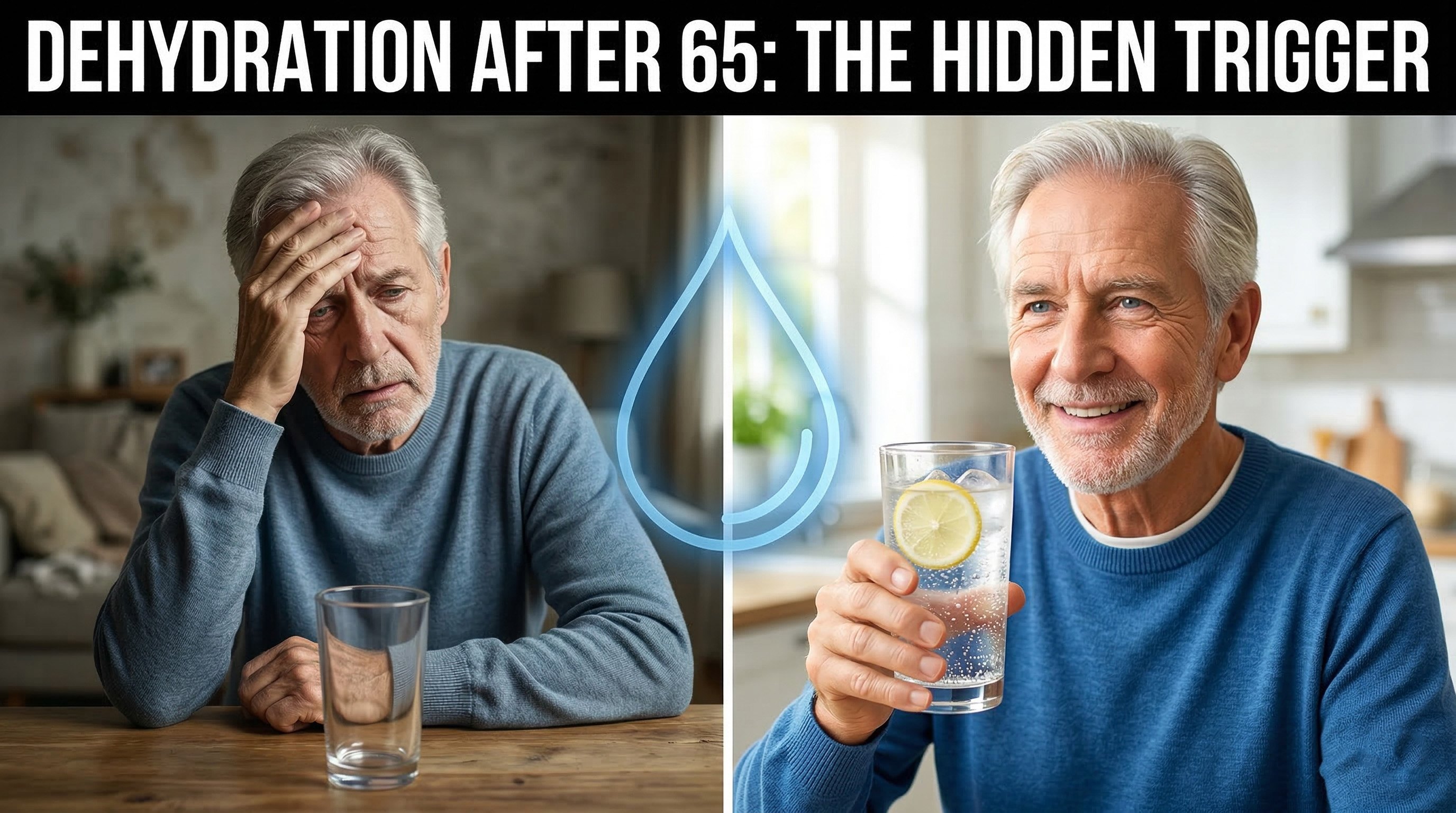
Dehydration After 65: The Underrecognized Trigger for Confusion and Falls
Introduction
Dehydration—put simply, a state in which the body loses more fluid than it takes in—is one of the most common yet underrecognized health threats facing adults over 65. In its mildest form, dehydration may produce subtle fatigue or a dry mouth that goes unnoticed. In its more severe form, it can precipitate emergency hospitalization, acute confusion, and dangerous falls (established). Yet because its early signs overlap with symptoms frequently attributed to “normal aging,” dehydration is routinely missed by older adults, families, and even clinicians until a crisis occurs.
This article explains why aging itself raises dehydration risk, how even modest fluid deficits can destabilize blood pressure, cognition, and balance, and what practical steps can reduce harm—without replacing individualized guidance from a healthcare provider.
1) Why Dehydration Becomes More Likely After 65
The human body’s ability to maintain fluid balance depends on a finely tuned feedback loop: thirst prompts drinking, and the kidneys adjust how much water they retain. After 65, both sides of that loop tend to weaken. Research suggests that the subjective sensation of thirst diminishes with age, meaning older adults may not feel compelled to drink even when their bodies need fluid (citation needed). Simultaneously, age-related changes in kidney function can reduce the kidneys’ capacity to concentrate urine and conserve water (citation needed).
These physiological shifts do not occur in isolation. Many older adults take medications—diuretics, ACE inhibitors, laxatives, certain antidepressants—that increase fluid loss or alter electrolyte balance (established). Chronic conditions such as diabetes, heart failure, and chronic kidney disease further complicate hydration status (established). Cognitive impairment may cause a person to simply forget to drink, while mobility limitations can make walking to a kitchen feel burdensome.
The cumulative effect is significant: some estimates suggest that between 20 and 30 percent of community-dwelling older adults experience chronic underhydration (citation needed). In long-term care settings, rates may be even higher (citation needed).
2) The Mechanisms: Blood Pressure, Brain, and Balance
Understanding why dehydration matters so much after 65 requires tracing its downstream effects on three interconnected systems.
Blood pressure and orthostatic response. Adequate blood volume is essential for maintaining stable blood pressure when a person stands. Dehydration reduces circulating blood volume, which can impair the body’s orthostatic reflexes—the rapid cardiovascular adjustments that prevent a blood pressure drop upon standing (established). The resulting lightheadedness or dizziness is a well-documented pathway to falls (established). In older adults who already have blunted autonomic responses or who take antihypertensive medications, even mild fluid deficits may amplify orthostatic symptoms (hypothesis).
Cognition and delirium vulnerability. Dehydration is associated with reduced cerebral perfusion and may alter electrolyte concentrations that support normal neuronal function (established). Clinical studies have identified dehydration as a risk factor for delirium, particularly during acute illness, postoperative recovery, or heat exposure (citation needed). The resulting confusion is frequently mistaken for dementia progression rather than a potentially reversible physiological stressor.
Fatigue and constipation. Insufficient fluid intake slows gastrointestinal motility and is associated with constipation, which can reduce appetite and further decrease fluid consumption—creating a self-reinforcing cycle (established).
3) Early Warning Signs People Miss
The earliest indicators of dehydration in older adults are often nonspecific and easy to dismiss. Fatigue attributed to a “bad night’s sleep,” mild irritability, or a vague sense of feeling “off” may all reflect inadequate hydration. Decreased urine output or urine that appears darker than usual can signal fluid deficit, though urine color is influenced by diet, medications, and kidney function, so it should be interpreted cautiously and not used as a sole diagnostic tool.
Other signs that warrant attention include dry mouth and lips, headache, muscle cramps, and a noticeable drop in energy during or after physical activity. In more progressed cases, rapid heart rate, confusion, sunken eyes, and inability to produce tears may emerge (established). Any sudden change in mental status in an older adult should prompt consideration of dehydration among other causes, and a clinician should be contacted promptly.
Vignette A. Margaret, 78, spent a warm Saturday gardening—something she has done for decades. By evening, her daughter noticed Margaret repeating questions and having difficulty finding words. Margaret insisted she was “just tired.” A visit to urgent care revealed she had consumed very little fluid all day. After supervised rehydration, her mental clarity returned soon after. What looked like a sudden cognitive decline was, in fact, a reversible consequence of dehydration.
4) High-Risk Situations in Everyday Life
Certain everyday circumstances quietly elevate dehydration risk. Hot weather is the most obvious: heat increases insensible fluid losses through perspiration, yet many older adults avoid air conditioning due to cost or preference (established). During heat waves, emergency department visits among older adults for dehydration-related complaints rise sharply (citation needed).
Acute illness—particularly gastroenteritis, urinary tract infections, or respiratory infections with fever—dramatically increases fluid requirements at exactly the moment when appetite and energy to drink are lowest (established). Post-surgical recovery presents a similar challenge.
Less recognized triggers include social isolation (no one prompting fluid intake), embarrassment about urinary incontinence leading to deliberate fluid restriction, and swallowing difficulties (dysphagia) that make drinking uncomfortable (established).
Vignette B. David, a retired teacher caring for his 82-year-old father, grew frustrated by his father’s refusal to drink water throughout the day. He interpreted it as stubbornness. One morning, his father stood from a chair, swayed, and grabbed the table to avoid falling. A home nurse explained that his father’s thirst sensation had likely diminished, and that the near-fall was probably related to low fluid intake compounded by his blood pressure medication. With guidance, David began offering small amounts of flavored beverages at regular intervals rather than waiting for his father to ask. The dynamic shifted from conflict to routine.
An equity note is essential here. Older adults on fixed incomes may face difficult trade-offs between paying for air conditioning and other necessities. Those with limited mobility or without reliable caregiving support may lack consistent access to beverages throughout the day. Communities with inadequate cooling infrastructure can disproportionately expose low-income and socially isolated older residents to heat-related dehydration (established). Addressing dehydration in aging populations is therefore not only a clinical matter but also a question of social and environmental equity (hypothesis).
5) What Helps (Without Overpromising)
No single fluid quantity is universally appropriate—needs vary based on body size, activity level, climate, health conditions, and medications. Rather than prescribing a specific daily volume, the following strategies may support adequate hydration for many older adults. Individuals with heart failure, kidney disease, or fluid-restricted diets should discuss hydration goals with their clinician.
- Build time-based routines. Drinking a small glass of water at consistent times—upon waking, with each meal, and before bed—creates a pattern that does not rely on thirst as a cue.
- Keep beverages visible and accessible. A filled cup within arm’s reach is a simple environmental nudge, especially for those with limited mobility.
- Offer variety. Water is not the only option. Herbal teas, broths, diluted juices, and water-rich foods such as melon, cucumber, and soup all contribute to fluid intake.
- Monitor, but do not over-interpret. Pale, straw-colored urine generally suggests adequate hydration, while consistently dark urine may warrant increased intake—but always consider medication effects and discuss persistent changes with a provider.
- Manage heat exposure. During high-temperature days, staying in cooled environments, wearing light clothing, and increasing fluid intake can reduce risk. Community cooling centers exist in many municipalities and can be lifesaving for those without home air conditioning.
- Know the red flags. Sudden confusion, inability to keep fluids down, rapid heartbeat, very dark or absent urine, and fainting are signs that warrant immediate medical attention.
Conclusion
Dehydration after 65 is not a minor inconvenience—it is a physiologically significant condition that can cascade into confusion, falls, and hospitalization. Because its onset is quiet and its symptoms mimic other age-related changes, it demands proactive awareness from older adults, caregivers, and healthcare systems alike.
Key Takeaways
- Thirst becomes an unreliable signal after 65, making scheduled fluid intake more important than drinking only when thirsty.
- Even mild dehydration can lower blood pressure upon standing, increasing dizziness and fall risk—especially for those on certain medications.
- Sudden confusion in an older adult may reflect dehydration, not irreversible cognitive decline, and should prompt clinical evaluation.
- Heat, illness, medication use, and social isolation are everyday risk multipliers that caregivers and clinicians should actively monitor.
- Equitable access to cooling, beverages, and caregiver support is a public health priority, not merely a personal responsibility.