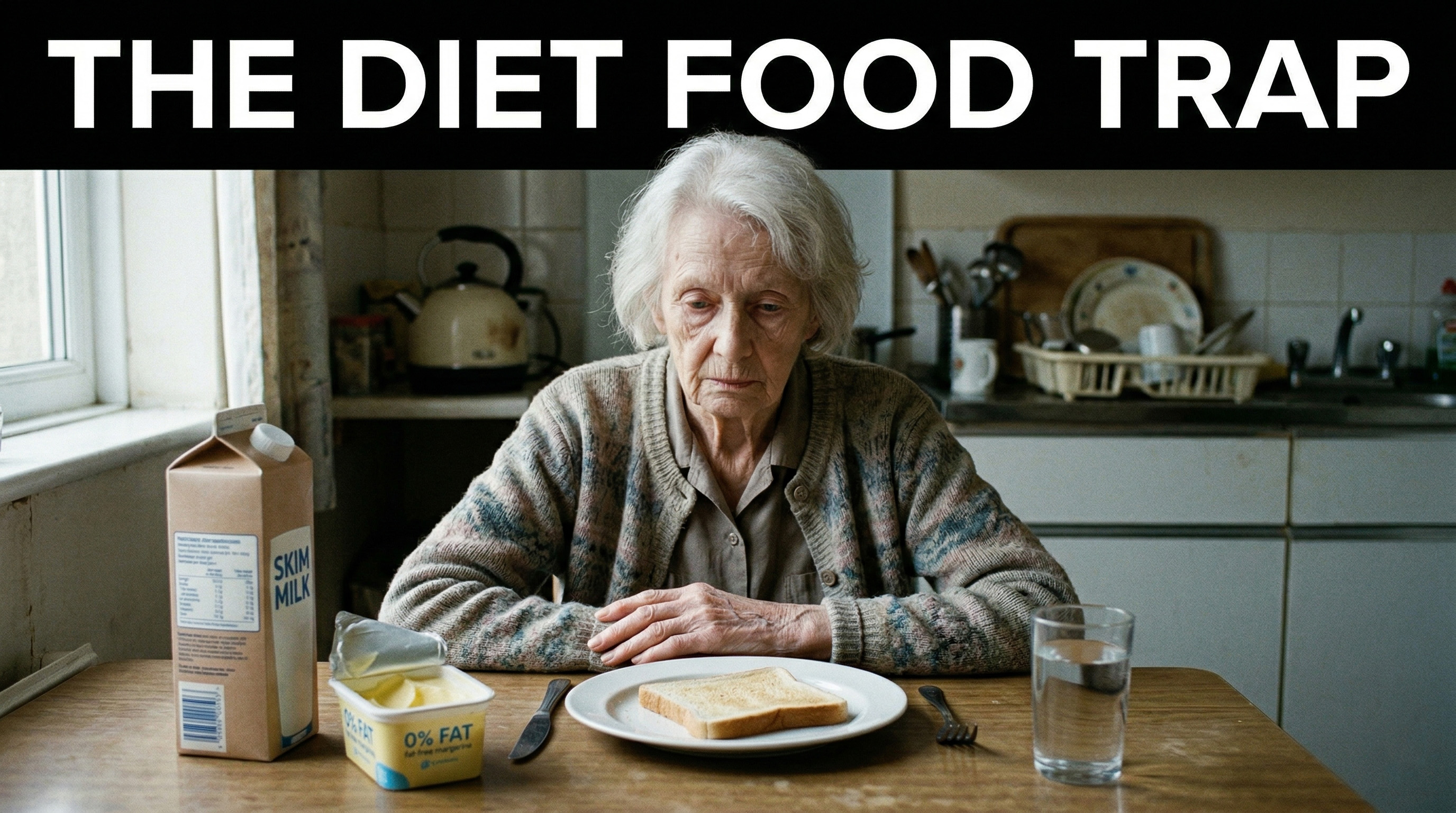
She is 85. She still buys skim milk. She trims every visible scrap of fat from her chicken breast and spreads her toast, when she eats toast at all, with a thin, apologetic scrape of margarine. She has been doing this since 1987, when her doctor told her that butter would kill her.
That doctor is long retired. The science has moved on. But the fear never left.
An entire generation internalized the low-fat gospel of the 1980s and 1990s with near-religious intensity. Egg yolks were poison. Whole milk was reckless. Red meat was a death sentence. The message was clear, absolute, and everywhere: fat clogs your arteries, and discipline saves your life. Millions of Americans restructured their kitchens, grocery lists, and identities around this single idea.
The problem is that at 85, this discipline can do real harm.
When the Real Enemy Is Not Cholesterol
For many adults over 75, the greater nutritional threat is no longer indulgence. It is undernourishment. Unintentional weight loss, declining muscle mass, and reduced caloric intake can accelerate frailty, increase fall risk, and make everyday recovery dramatically harder.
In that context, the danger is not a pat of butter. It is a refrigerator full of fat-free yogurt, diet crackers, and calorie-stripped substitutes that leave an aging body chronically underfed.
For many older adults, the new nutritional priority is caloric density: whole milk, cream stirred into soups, butter melted over vegetables, nut butters, cheese, eggs cooked in olive oil. These are not indulgences. They are practical tools for preserving strength, maintaining body weight, and supporting quality of life.
Yet telling someone who spent forty years fearing fat to suddenly embrace it is not just a medical instruction. It is a psychological reversal. It touches deeply rooted beliefs about health, control, and self-discipline.
The Breakdown Between Prescription and Plate
Even when a geriatrician or dietitian recommends a calorie-dense diet, the instruction often falls apart before it reaches the kitchen.
A son hears that his mother needs more fat and protein, then hesitates at the grocery store because heavy cream feels wrong. A home aide prepares meals but skips the butter because she believes she is making the healthier choice. Everyone involved is acting with good intentions. Everyone wants the best outcome. But they are operating from different assumptions.
The nutritional plan exists on paper. It never makes it to the plate.
This is not a failure of care. It is a failure of coordination. There is no shared workspace, no single source of truth, and no reliable way to ensure that a clinical directive flows clearly from the doctor’s recommendation to the evening meal.
Aligning the Ecosystem Around a New Playbook
This is exactly the kind of problem Agefully is built to solve. The platform creates a shared coordination space where every member of the care ecosystem, from physician to dietitian to family member to home aide, can see, understand, and act on the same goals.
When a registered dietitian updates a nutrition plan to prioritize caloric density, that update becomes visible to everyone involved. The family member managing grocery delivery knows what to buy and why. The home aide has clear guidance to cook with butter, cream, and oil, backed by confidence that the plan reflects professional direction rather than guesswork.
The guilt begins to disappear because the alignment is explicit. Nobody is freelancing. Nobody is relying on outdated assumptions. The plan travels intact from the clinical recommendation to the dinner table.
Important note: Sudden, unexplained weight loss, difficulty swallowing, or a complete loss of appetite can signal serious underlying medical conditions and should be evaluated by qualified healthcare professionals. Agefully is a coordination platform, not a diagnostic or clinical tool. It does not replace the expertise of a physician, registered dietitian, or speech-language pathologist. Any meaningful dietary change should be guided by appropriate medical advice.
Bringing Back the Joy of a Real Meal
There is something deeply human at the heart of this issue. Food is not just fuel. For an 85-year-old, a rich bowl of soup made with real cream, a piece of bread with actual butter, or a soft scrambled egg cooked in olive oil can be one of the last reliable pleasures of the day.
True caregiving, in this case, means giving people permission to eat well again. Not “well” as defined by a 1990s diet pamphlet, but well as defined by what their body actually needs now. That permission only holds when it is backed by a coordinated team that understands the science, shares the plan, and trusts the process.
Sometimes, the most radical act of care is a second scoop of mashed potatoes with butter, and a team that knows exactly why it matters.