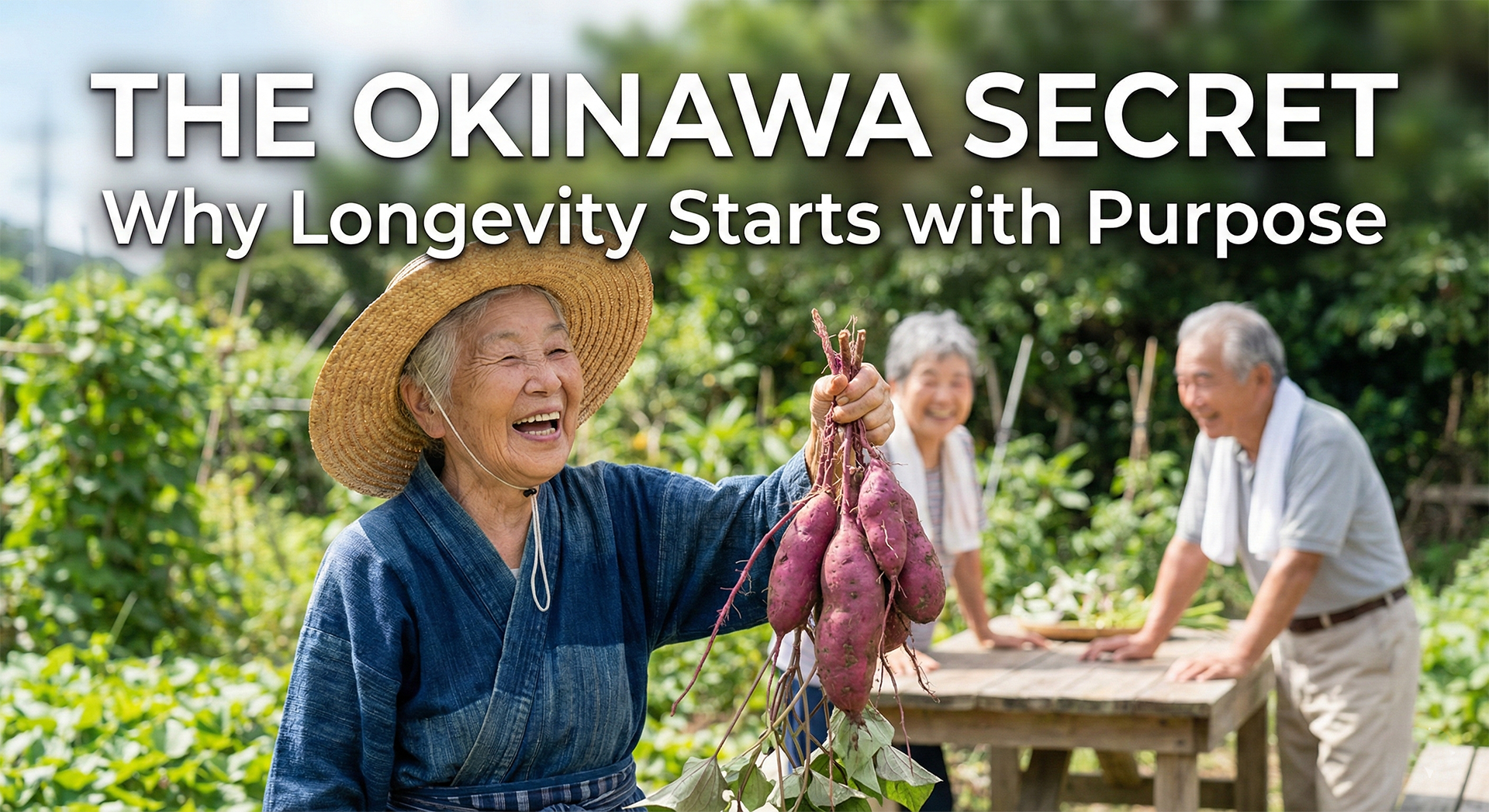
Healthy aging is not about avoiding birthdays. It is about preserving strength, clarity, connection, and purpose as the years move forward. For decades, aging was framed primarily through a medical lens, focused on decline and disease management.
Yet, places like Okinawa, Japan, show us a different path. Healthy aging is proactive. It begins long before crisis. And it is shaped daily by small, consistent behaviors.
If we want to rethink aging well, looking at how the world's longest-lived populations structure their days deserves a central place in the conversation.
Ikigai: The Muscle of the Mind
In Okinawa, there is no word for "retirement." Instead, they cultivate their Ikigai—their reason for getting up in the morning.
The brain thrives on stimulation. Having a daily project, even a modest one, maintains cognitive resilience and provides essential stability when the built-in structure of a career ends.
Ikigai provides:
- Cognitive anchoring through daily mental stimulation
- Predictable daily structure that reduces anxiety
- A sense of ongoing contribution and meaning
Purpose may be one of the most powerful longevity tools available.
The Moai: The Social Infrastructure
One of Okinawa's strongest traditions is the Moai, a lifelong social support group that meets regularly for conversation, shared experiences, and companionship.
Humans are social beings at every age. Connection is not optional. It is foundational. Community involvement and family relationships support emotional regulation and physical health in measurable ways.
These relationships serve as:
- A safety net during times of emotional or physical stress
- Preventative infrastructure against cognitive decline
- A consistent source of joy and shared history
Connection is not just recreation. It is a vital health metric.
Hara Hachi Bu: The Practice of Mindful Moderation
Beyond purpose and connection, Okinawans practice Hara Hachi Bu, a teaching that instructs people to eat until they are 80% full.
But this principle extends far beyond the dinner plate. It is a lesson in mindful moderation that can be applied to all aspects of modern life, especially how we consume information and expend energy.
Practicing moderation helps to:
- Prevent physical lethargy and metabolic strain
- Encourage active engagement rather than passive consumption
- Maintain energy levels throughout the day
Designing Your Own Okinawa Today
For many seniors, staying strong and independent isn’t about grand gestures or moving to a Blue Zone. It’s about small, consistent habits that build resilience, confidence, and joy.
You can apply these principles at home by:
- Finding your micro-Ikigai: Jot down one thing you’re grateful for, one memory, or one goal each morning.
- Reaching out to your Moai: Connect with someone. A quick message, call, or video shoutout can lift your spirits.
- Practicing moderation: Swap endless scrolling for active engagement and focus on quality over quantity in your daily routines.
Aging is not a problem to solve. It is a stage of life that can be supported thoughtfully.
By cultivating your own purpose and nurturing your social ties, you aren't just passing the time. You are actively shaping your future.
Your independence starts with how you show up each day — and every step counts.