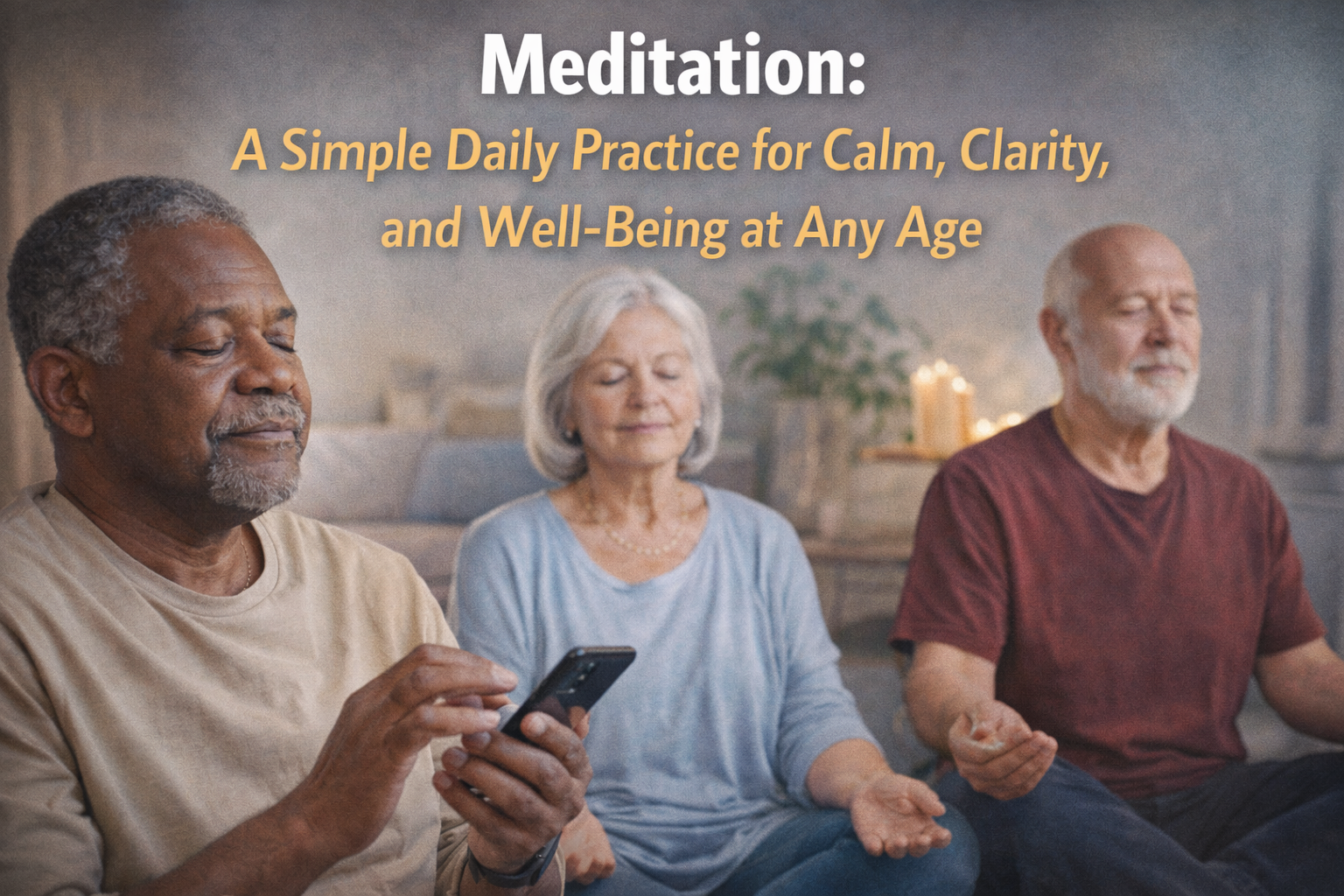
Meditation is often misunderstood. Some imagine long periods of silence, crossed legs, or perfectly quiet minds. In reality, meditation is much simpler, and far more human, than that.
At its heart, meditation is the practice of pausing on purpose. It’s about creating small moments of awareness in a busy day, moments that help us feel more present, grounded, and at ease. And the best part? It’s accessible at any age, no experience required.
What Meditation Really Is
Meditation isn’t about emptying your mind or “doing it right.” Thoughts will come and go, that’s normal. Meditation is about noticing those thoughts without judgment and gently returning your attention to something steady, like your breath, a sound, or a simple phrase.
For many older adults, meditation becomes less about self-improvement and more about self-kindness. It’s a way to meet each day with patience, curiosity, and acceptance.
Why Meditation Matters as We Age
As we move through life, our bodies and routines change. We may face new stressors, health concerns, or moments of uncertainty. Meditation offers a way to respond to those changes with steadiness rather than resistance.
Regular meditation has been linked to benefits such as:
- Reduced stress and anxiety
- Improved focus and emotional balance
- Better sleep quality
- Greater sense of calm and perspective
Just a few minutes a day can make a meaningful difference, not by changing life’s challenges, but by changing how we relate to them.
Meditation Is Not One-Size-Fits-All
There is no single “right” way to meditate. The most effective practice is the one that fits naturally into your life.
Some people prefer quiet breathing exercises in the morning. Others enjoy guided meditations, gentle body scans, or mindful walking. Even sitting comfortably and noticing the rhythm of your breath for two minutes counts.
Meditation can be done sitting, lying down, or even while moving. Comfort matters. Consistency matters more than duration.
Starting Small and Staying Kind to Yourself
If you’re new to meditation, start small. One to three minutes is enough. Set a timer, take a few slow breaths, and simply notice what’s happening in your body and mind.
There’s no need to judge your experience. A wandering mind doesn’t mean you’ve failed, it means you’re human. Each moment of noticing is part of the practice.
Over time, these small pauses can become anchors in your day, moments of calm you can return to whenever you need them.
Meditation as Part of Daily Life
Meditation doesn’t have to be separate from everyday activities. It can be woven into daily routines:
- Taking mindful breaths before starting the day
- Pausing to notice sensations while drinking tea or coffee
- Bringing awareness to a short walk or stretch
- Ending the day with a few moments of quiet reflection
These simple practices help turn ordinary moments into opportunities for presence and peace.
Why This Matters to Agefully
At Agefully, we believe well-being is built through daily habits that support both mind and body. Meditation isn’t about perfection or performance, it’s about creating space for yourself, exactly as you are.
Aging with intention means caring for our inner world as much as our outer one. Meditation offers a gentle, powerful way to do just that.
The goal isn’t to slow down time.
It’s to be more fully here within it.