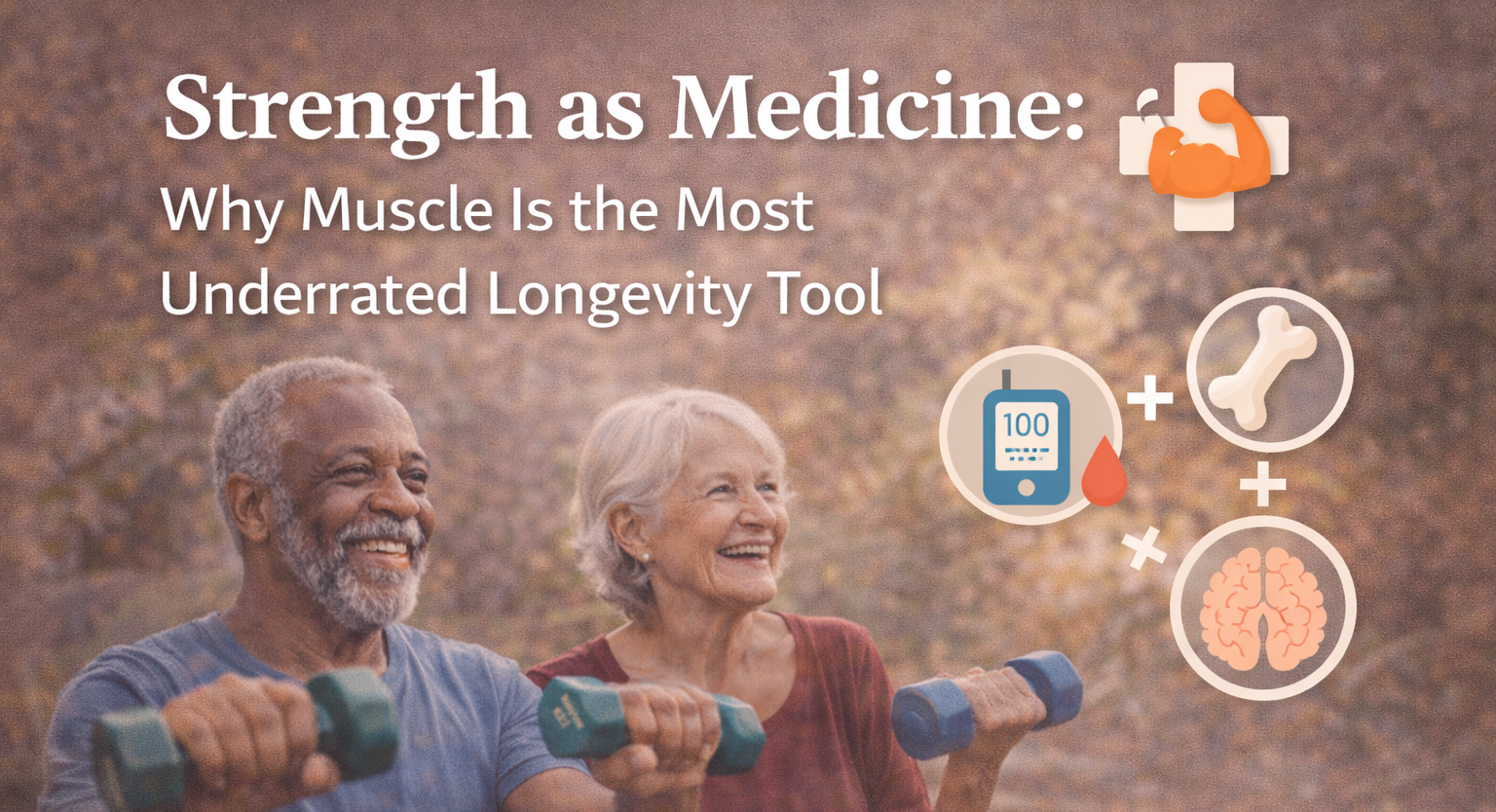
For years, longevity conversations have focused on diet trends, supplements, biohacking, and cardiovascular fitness. Walking 10,000 steps a day became a benchmark for healthy aging. But emerging science is shifting the spotlight to something far more powerful and surprisingly overlooked: muscle.
Muscle is not just about appearance or athletic performance. It is a metabolic organ, a regulator of blood sugar, a protector against falls, a stabilizer of joints, and one of the strongest predictors of independence in later life. Strength is not cosmetic. It is medicine.
If we want to rethink aging well, resistance training deserves a central place in the conversation.
Muscle and Mortality: What the Research Shows
A growing body of research shows that muscle mass and strength are directly associated with lower mortality risk.
Studies led by Dr. Peter Attia, longevity physician and author, emphasize that muscle mass plays a critical role in long-term metabolic health and physical resilience. He frequently highlights grip strength and lower body strength as practical predictors of lifespan and healthspan.
Research published in journals such as The Journal of Gerontology and BMJ has shown that individuals with higher muscle strength have lower rates of cardiovascular disease, diabetes, and all-cause mortality.
In particular:
- Grip strength strongly correlates with reduced mortality risk
- Greater muscle mass improves insulin sensitivity
- Resistance training reduces systemic inflammation
- Stronger individuals experience fewer falls and fractures
Muscle functions as a reserve system. During illness or stress, the body draws on protein stores. Individuals with low muscle mass have less physiological resilience.
Muscle as a Metabolic Organ
Muscle tissue plays a key role in glucose regulation. After meals, muscles absorb glucose from the bloodstream. Higher muscle mass improves blood sugar control and reduces the risk of type 2 diabetes.
Research from Dr. Stuart Phillips, a professor of kinesiology at McMaster University, has demonstrated that resistance training significantly improves metabolic health, even in older adults. Importantly, muscle remains highly responsive to training at any age.
This challenges the myth that strength building is only for the young.
Preventing Frailty Before It Begins
Sarcopenia, the age-related loss of muscle mass and strength, begins as early as the 30s and accelerates after age 60. Without intervention, it can lead to frailty, reduced mobility, and loss of independence.
Dr. Maria Fiatarone Singh, a leading researcher in geriatric exercise science, conducted groundbreaking studies showing that even adults in their 80s and 90s can dramatically increase strength through progressive resistance training.
Her research found that structured strength programs improved walking speed, stair climbing ability, and overall physical function in nursing home residents.
Muscle is not just about living longer. It is about living independently.
Strength and Brain Health
Emerging evidence also links resistance training to cognitive benefits. Studies suggest that strength training may improve executive function, memory, and overall brain health.
Exercise stimulates the release of brain-derived neurotrophic factor (BDNF), a protein that supports neuron growth and cognitive resilience. While aerobic exercise has long been praised for brain health, resistance training is increasingly recognized as equally important.
Strong muscles support a strong mind.
Rethinking Exercise for Aging Adults
Traditional advice for older adults often prioritizes light cardio and gentle stretching. While both are valuable, they are incomplete without resistance training.
The World Health Organization recommends muscle-strengthening activities at least twice per week for adults over 65. Yet many aging adults avoid strength training due to fear of injury, lack of guidance, or outdated beliefs.
Strength training does not require heavy barbells or gym memberships. It can include:
- Bodyweight exercises
- Resistance bands
- Light dumbbells
- Functional movements like sit-to-stand exercises
- Supervised strength programs in community centers
The key is progressive overload: gradually increasing resistance over time.
Strength as a Longevity Strategy
If anti-aging once meant reducing wrinkles, modern longevity science reframes it as preserving function.
Strength enables:
- Climbing stairs independently
- Carrying groceries
- Getting up from the floor safely
- Maintaining balance
- Recovering from illness more effectively
Muscle protects bone density, reduces fall risk, and improves joint stability. It enhances confidence and reduces fear of movement, a major contributor to decline.
Perhaps most importantly, strength training builds agency. It reminds individuals that aging is not simply something that happens to them. It is something they can actively shape.
Designing a Stronger Future
Healthcare systems increasingly recognize the importance of “exercise as medicine.” However, strength training remains under-prescribed compared to pharmaceuticals.
Aging services, primary care providers, and community programs can play a vital role in integrating strength education and accessible resistance programs into everyday life.
Muscle is not vanity. It is vitality.
In the longevity conversation, we often ask how long we can live. A better question may be: how strong can we remain?
Strength is not optional. It is one of the most powerful, accessible, and underrated tools for healthy aging.