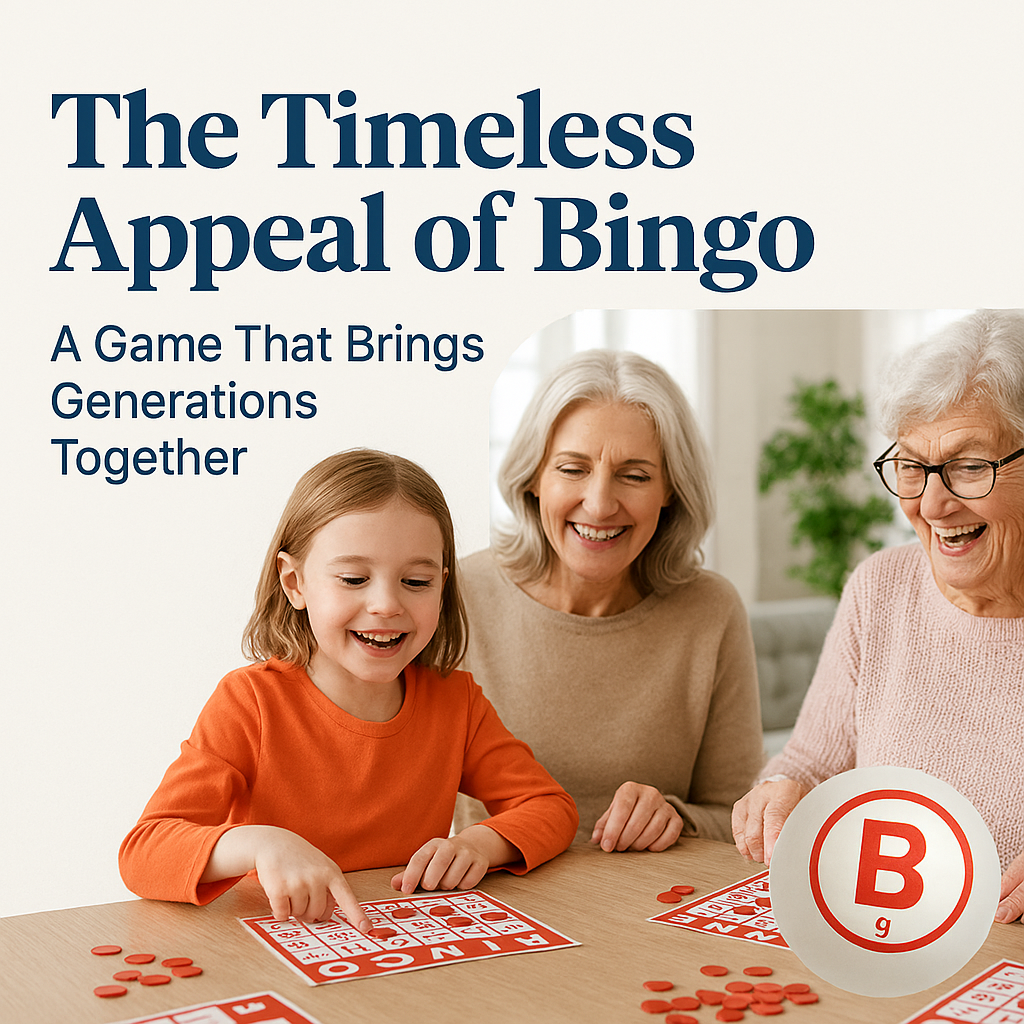
Few games have the staying power of Bingo. With its simple cards, rolling numbers, and unmistakable call of “Bingo!”, the game has traveled across centuries, continents, and cultures. Today, it remains especially beloved by older adults, not just as a pastime, but as a meaningful social ritual that brings joy, connection, and a sense of belonging.
So how did Bingo begin, and why does it continue to hold such a special place in the hearts of older generations?
A Brief History of Bingo
Bingo’s story begins in 16th-century Italy, where a lottery-style game called Lo Giuoco del Lotto d’Italia became popular among the public. From there, the game spread across Europe, evolving as it went. By the 18th century, a similar number-based game was being used in Germany, not for entertainment, but as an educational tool to help children learn math and spelling.
The version we recognize today took shape in the early 20th century in the United States. In 1929, a toy salesman named Edwin S. Lowe encountered a carnival game called “Beano,” where players marked numbers on cards using dried beans. When someone accidentally shouted “Bingo!” instead of “Beano,” the name stuck, and a cultural phenomenon was born.
Churches and community organizations quickly adopted Bingo as a way to raise funds and bring people together. Over time, it became a staple in community halls, senior centers, and social clubs across the country.
Why Bingo Resonates So Deeply With Older Adults
While Bingo is enjoyed by people of all ages, its popularity among older adults is no accident. The game meets many emotional, social, and practical needs that become especially important later in life.
1. Simple, Accessible, and Inclusive
One of Bingo’s greatest strengths is its simplicity. The rules are easy to understand, there’s no need for fast reflexes, and players can join in regardless of physical ability or gaming experience. This makes Bingo welcoming and stress-free, a game where everyone can participate and feel successful.
2. A Powerful Social Connector
For many older adults, Bingo is less about the numbers and more about the people. Weekly Bingo nights offer structure, routine, and something to look forward to. They create opportunities for conversation, laughter, friendly competition, and shared experiences.
In a stage of life where social circles may shrink due to retirement, relocation, or loss, Bingo provides a reliable way to stay connected and combat loneliness.
3. Mental Engagement Without Pressure
Bingo gently stimulates the brain. Players track numbers, scan cards, and stay alert, activities that support cognitive engagement without being overwhelming. Unlike complex strategy games, Bingo offers mental exercise without stress, making it both enjoyable and beneficial.
4. Nostalgia and Comfort
For many older adults, Bingo is tied to fond memories, church fundraisers, community dances, family nights, or early social outings. Playing Bingo today often reconnects them with earlier chapters of life, evoking comfort, familiarity, and a sense of continuity.
That nostalgia matters. It reminds players that their experiences, traditions, and joys are still relevant and valued.
5. A Sense of Purpose and Belonging
Showing up for Bingo means being part of something. Whether it’s helping set up chairs, welcoming new players, or cheering when someone wins, the game fosters participation and purpose. It reinforces the idea that every individual matters within the community.
Bingo in the Modern Age
While the heart of Bingo remains unchanged, the game has evolved with the times. Today, Bingo can be found not only in community halls but also online, on tablets, and through virtual social platforms. These modern formats have made it possible for older adults with limited mobility or transportation to continue enjoying the game and staying socially engaged.
Many organizations now combine Bingo with themed events, wellness programs, or intergenerational activities, proving that Bingo is not a relic of the past, but a living tradition that continues to adapt.
More Than a Game
At its core, Bingo is about connection. It’s about shared moments, familiar rituals, and the simple joy of being together. For older adults, it offers laughter, companionship, mental stimulation, and a comforting sense of belonging, all wrapped into one timeless game.
At Agefully, we celebrate experiences that help people stay engaged, connected, and fulfilled at every stage of life. Bingo is a beautiful reminder that sometimes, the simplest traditions are the ones that endure the longest.
And really, who doesn’t love the thrill of hearing their number called?
Join Us
With Agefully.ai, we organize Bingo events often—bringing communities together, one joyful game at a time.