The Invisible Crisis
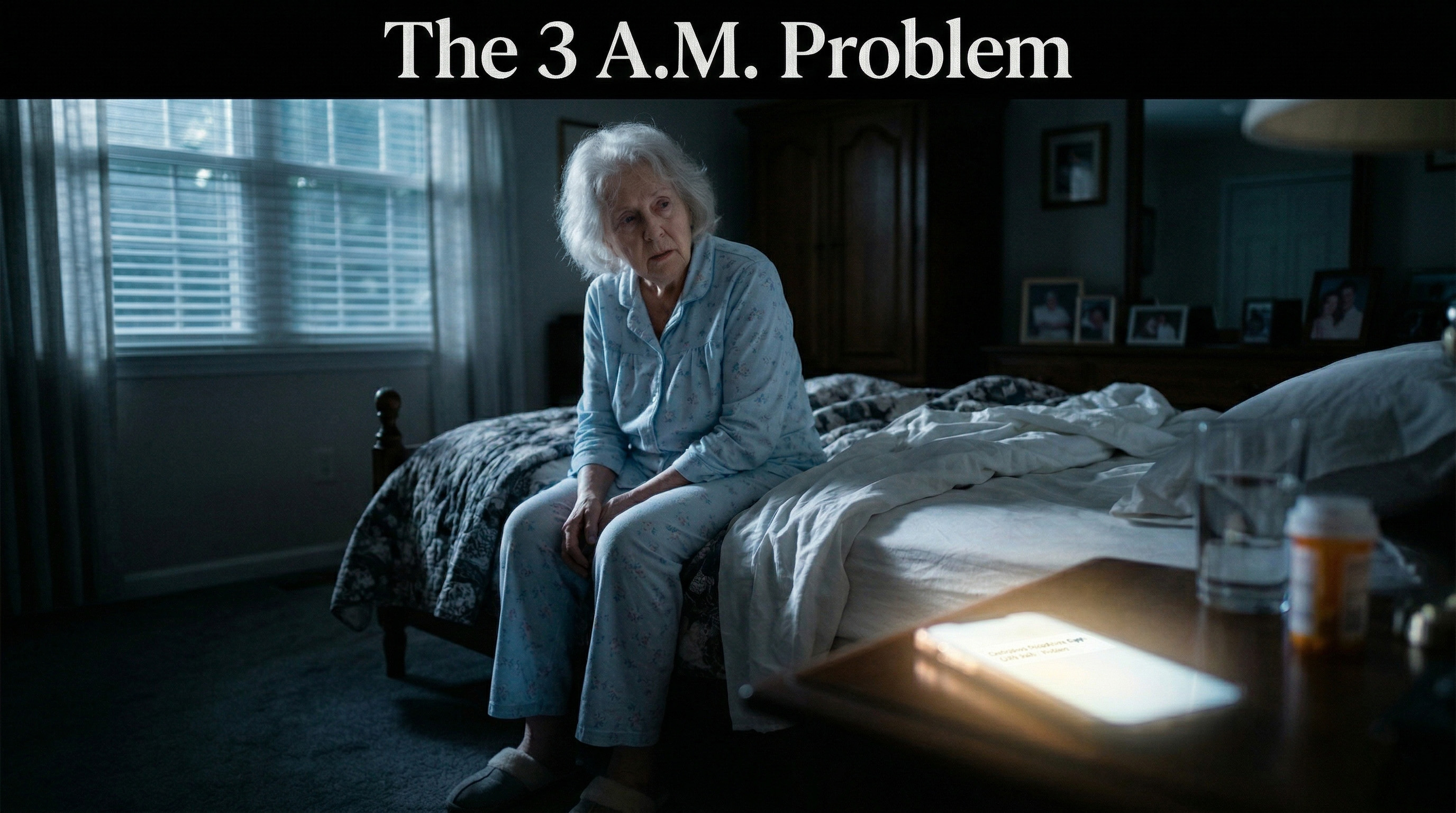
It is 3 A.M. The house is quiet, but your mother is not asleep. She is sitting on the edge of the bed, disoriented, unsure of where the bathroom is. Down the hall, or maybe across the country, you, the family caregiver, are also awake, checking your phone, wondering if tonight's wakefulness is something more serious. This is not a minor inconvenience. This is the first domino in a chain of failures that will play out across the entire next day.
Sleep disturbances are not a normal part of aging, but normal age-related changes to the circadian rhythm can make it harder to fall and stay asleep. Older adults experience a decline in total sleep time, with corresponding decreases in the percentage of time in slow-wave sleep and REM sleep, both of which are thought to promote metabolic and cognitive recovery and to enhance learning and memory. When those stages are cut short at 3 A.M., the damage is already in motion before sunrise.
And the caregiver is not immune. Sleep stood out as a frequent challenge: one-half of caregivers report having trouble sleeping at least once a week. Burnout frequently overlaps with other forms of strain, and caregivers who report burnout also commonly experience emotional stress, disrupted sleep, changes in social connection, and financial pressure. Two people are now running on empty. The system is already compromised.
The Clinical Domino Effect
Here is what the science says happens next.
Cognitive fog that mimics decline. A reduction in sleep does not occur independently of the effects on memory, attention, alertness, judgment, decision-making, and overall cognitive abilities in the brain, resulting in decreased function and impaired cognitive performance. This is not a theoretical concern. Research data reveal that individuals sleeping less than six hours per night had significantly greater declines in memory, executive function, and attention, and these associations remained significant after adjusting for confounders such as age, sex, and comorbidities (published in PMC, 2025). For an older adult already managing mild cognitive changes, a single bad night can make them appear far more impaired than they actually are. Emerging evidence links sleep deprivation to adverse cardiometabolic health and cognitive health, and an increased risk of dementia among older adults (CDC, Preventing Chronic Disease, 2023). The line between a bad night and a bad trajectory blurs fast.
Falls become dramatically more likely. Falls are the leading cause of injury-related death among adults ages 65 and older, and the fall death rate is increasing. According to the CDC, over 14 million, or 1 in 4, older adults report falling every year. Now layer sleep deprivation on top. Sleep deprivation causes deleterious damage to the organism, causing imbalance in the systems of balance, coordination, attention, and concentration that can lead to falls (Journal of Clinical Sleep Medicine). A study involving women age 70 and older showed that getting fewer than five hours of sleep increases the risk for falls and fractures (cited by the National Council on Aging). Insomnia is also associated with impaired physical function and increased fall risk, and daytime drowsiness has been associated with harmful outcomes in longitudinal studies, including cardiovascular disease, falls, and death (Sleep in the Aging Population, PMC).
The morning after a bad night is not just uncomfortable. It is clinically dangerous.
The Ecosystem Adjustment: How Agefully Solves the Morning After
Most care systems treat a bad night in isolation. The home aide shows up at 9 A.M. with the usual plan. The physical therapist arrives at 11 A.M. expecting full participation. Nobody knows that the person they are working with got only three hours of fractured sleep.
Agefully changes that equation. When a family member or overnight caregiver logs a rough night on the platform, the entire care network sees it, in real time. The information flows instantly to every person involved in that day's care.
The home aide sees the sleep log and knows to skip the ambitious grocery outing, replacing it with a calm day at home. The physical therapist gets the alert and reschedules the balance-intensive session to a day when the older adult is rested and safer. Meal plans shift: lighter, easier-to-digest options replace the planned cooking project. Everyone on the team is on heightened fall-prevention alert, paying closer attention to transfers, lighting, and footwear.
This is not about canceling someone's life. It is about matching the day's plan to the body's actual capacity. When the biological reality changes overnight, the operational plan has to change with it. A shared coordination platform ensures that nobody on the care team is operating with yesterday's assumptions.
An important note: Chronic insomnia, sleep apnea, or any sudden, persistent change in sleep patterns can signal serious underlying clinical conditions, including neurological shifts, cardiovascular issues, or medication interactions. Agefully is a coordination platform, not a clinical tool. It does not diagnose, treat, or replace a medical evaluation by a physician or a sleep specialist. If sleep disruption becomes a pattern, the right next step is always a clinical assessment.
You Cannot Force Sleep. You Can Coordinate What Comes After.
You will not always be able to give your parent, your client, or your patient a perfect night of rest. Aging brings circadian changes, medication side effects, pain, anxiety, and a dozen other factors that conspire against unbroken sleep. That part is often outside your control.
But what happens the next morning is not. When the care ecosystem knows a bad night occurred, it can respond: slower pace, softer schedule, sharper vigilance. More than one out of four older people falls each year, and falling once doubles your chances of falling again. Preventing that first fall on a sleep-deprived day could be the difference between independence and a hospital bed.
You cannot always force a good night of sleep. But with the right coordination, you can build a safer, softer day to catch the person when they wake up.