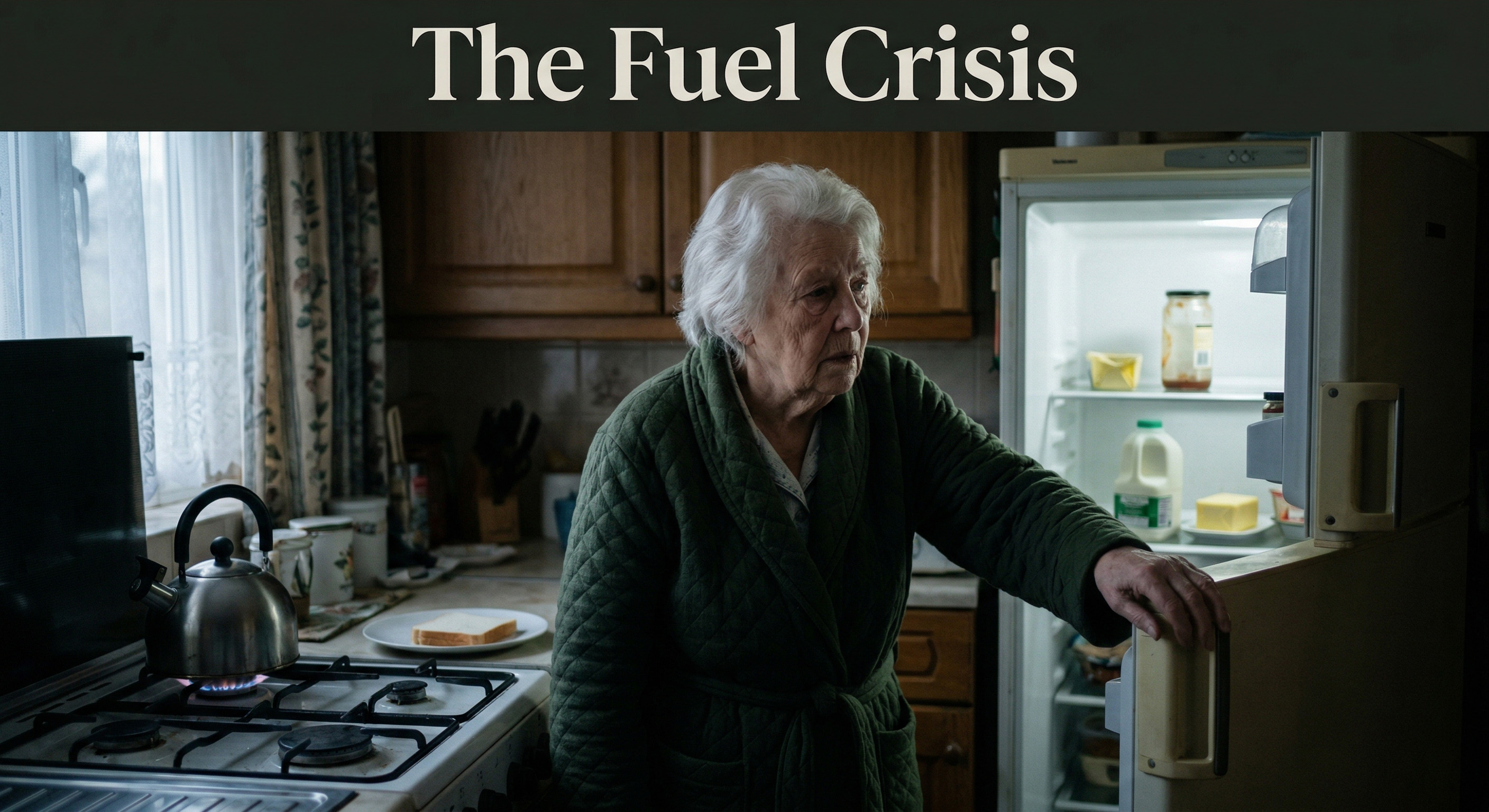
It is 7:30 in the morning. An 81-year-old woman stands in front of her open refrigerator, staring blankly at the shelves. She slept poorly, waking at 2 a.m. and never truly falling back to sleep. The chicken thighs need to be thawed. The vegetables need to be washed, chopped, and cooked. There is a sequence of decisions: what to eat, what to combine, how long to cook, and when to turn off the stove. On a good day, this is manageable. On this day, after four hours of fractured sleep, the cognitive and physical load of cooking a proper meal feels like climbing a mountain without oxygen.
So she does what thousands of older adults do in this exact scenario. She boils the kettle, drops a teabag in a cup, and puts a slice of white bread in the toaster. This is what clinicians call the Tea and Toast Syndrome: a pattern of chronic undernutrition in which exhausted, isolated older adults default to the lowest-effort food available, consuming almost no protein, minimal fat, and virtually no hydration beyond a cup of weak tea.
The question is not whether this happens. It happens every single day, in homes across the country. The question is why the body conspires against itself after a single bad night of sleep.
The Biology of the Crisis
According to the Sleep Foundation, sufficient, restful sleep allows the body to regulate production of leptin and ghrelin, the two hormones that balance appetite and satiation. When sleep is inadequate, the body creates an imbalance that increases ghrelin levels and lowers leptin levels, which can cause the person to feel hungrier during the day. But the nature of that hunger is the critical detail. Research has shown that sleep restriction is associated with reductions in leptin (the appetite suppressant) and elevations in ghrelin (the appetite stimulant), along with increased hunger and appetite, especially an appetite for foods with high carbohydrate contents.
The sleep-deprived body does not crave grilled salmon or a spinach salad. It craves toast. It craves biscuits. It craves anything that provides fast, simple glucose with zero preparation effort.
The impact of sleep deprivation also extends into the brain's decision-making centers, compromising the ability to make rational food choices. Sleep loss reduces activity in the prefrontal cortex, the brain region responsible for impulse control, planning, and complex evaluation. With this higher-level processing diminished, a person's ability to override impulsive urges for unhealthy food is significantly weakened. For an older adult already managing age-related cognitive changes, this executive function deficit is not a minor inconvenience. It is the difference between preparing a balanced meal and surrendering to the path of least resistance.
The downstream consequences compound rapidly. Research published in PubMed Central (PMC) demonstrated through multiple logistic regression analysis that participants who were malnourished had a significantly higher risk of cognitive frailty, and that poor sleep quality was independently identified as a risk factor for cognitive frailty among older adults. Malnourished older adults are more likely to suffer from physical impairment, lower cognitive function, and frailty. In other words, the bad night creates the malnutrition, and the malnutrition accelerates the cognitive and physical decline, forming a self-reinforcing cycle that is extraordinarily difficult to break from the inside.
The Dehydration Danger
There is another dimension to this crisis that rarely gets the attention it deserves. When an older adult skips a real meal, they also skip the water content embedded in that meal. Fruits, vegetables, soups, and cooked grains all carry significant fluid. A cup of tea and dry toast replaces almost none of it. According to the National Council on Aging (NCOA), dehydration is common among older adults, occurring in up to 28 percent of this population. Adults 60 and older are at greater risk due to natural drops in thirst levels and body composition changes, and they are also more likely to take diuretics and other medications that cause fluid loss.
The NCOA warns that the tiredness and lack of coordination that may result from dehydration can also lead to falls and injury. Dehydration can lead to impaired brain perfusion, with subsequent dizziness and orthostasis, and orthostatic hypotension has been associated with falls. In one study, more than one third of older adults were dehydrated, with a strong association between dehydration and falls. The sequence is painfully straightforward: a bad night leads to poor eating, poor eating leads to dehydration, and dehydration leads to dizziness, lowered blood pressure, and a dramatically elevated risk of falling. A single fall can result in a hip fracture, hospitalization, and a steep, often irreversible, decline in independence.
The Agefully Solution: A Logistical Pivot
This is precisely the crisis that Agefully was designed to intercept. When a family member, overnight caregiver, or wearable device logs a bad night of sleep in the platform, the entire care ecosystem receives that signal. The daily plan adapts before the crisis materializes. The home aide arriving that morning knows not to suggest that the senior cook for themselves. Instead, the aide retrieves a pre-prepared, protein-rich meal from the refrigerator (prepared earlier in the week as part of the coordinated meal plan) and heats it up. Hydration protocols activate: water, electrolyte beverages, and water-rich foods are offered at scheduled intervals throughout the day. The family receives confirmation that nutrition and hydration targets were met.
The intervention is not medical. It is logistical. No one is diagnosing anything. The platform is simply ensuring that shared, timely information allows the right people to take the right action at the right moment.
An important note: Chronic loss of appetite, sudden weight loss, or difficulty swallowing can indicate serious underlying clinical conditions, including gastrointestinal disorders, depression, medication side effects, or neurological decline. Agefully is a coordination platform, not a clinical diagnostic tool. It does not replace a medical evaluation by a physician or a registered dietitian. Any persistent change in eating behavior should be evaluated by a qualified healthcare professional.
Protecting the Fuel Supply
You cannot always fix the sleep. Aging bodies contend with pain, nocturia, anxiety, and medication side effects that fragment rest in ways that no app or supplement can fully resolve. But you can coordinate the nutritional response so that a bad night does not starve the body of the protein, hydration, and micronutrients it needs to stay strong and stay safe. That is not a clinical intervention. It is a logistical one: the right information, reaching the right person, at the right time. And that is exactly what Agefully does.