The Illusion of Comfort
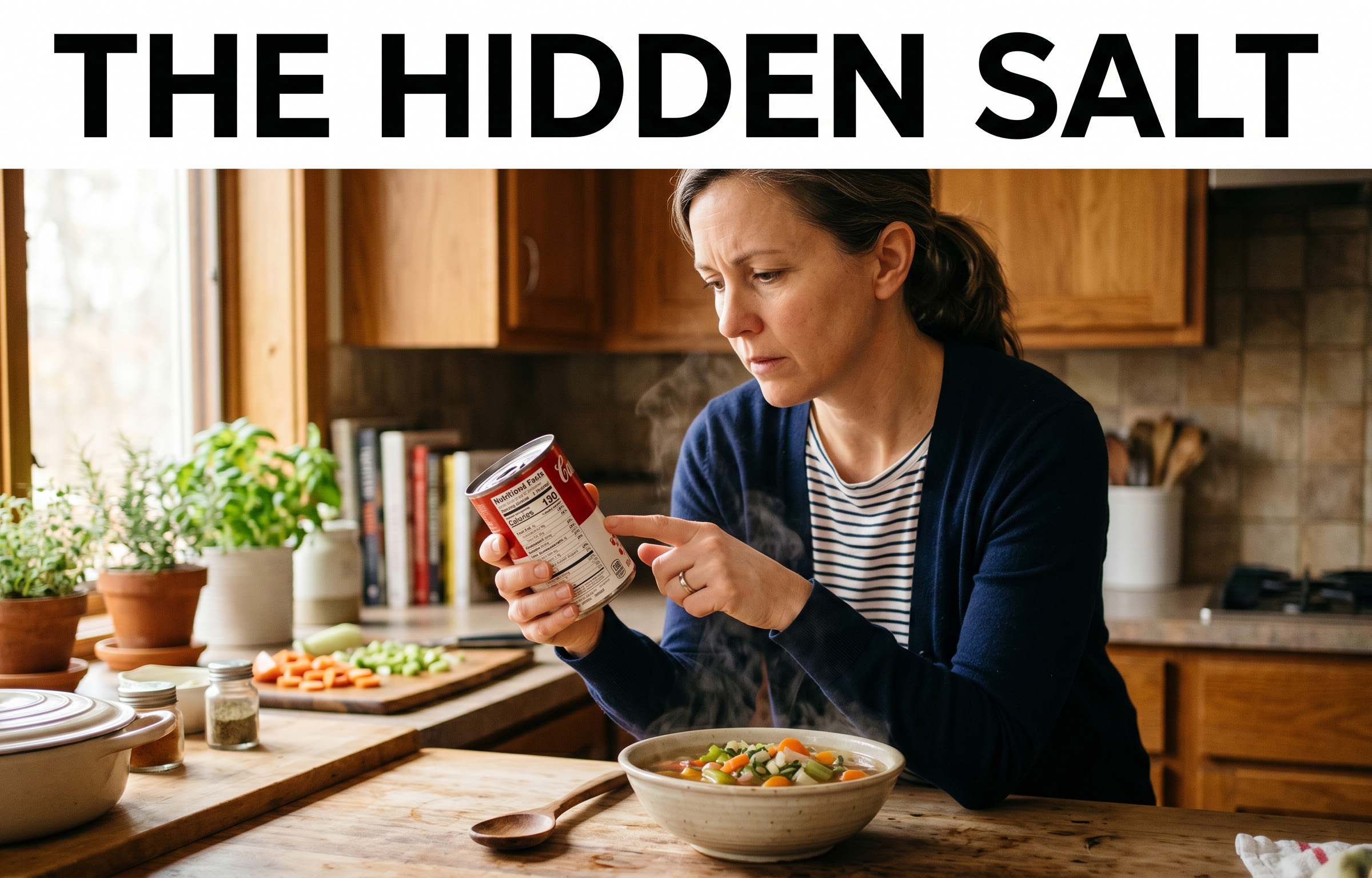
For many families, canned soup carries the language of comfort. It is warm, soft, familiar, and easy to prepare when energy is low and time feels thin. For an older adult who is tired, ill, grieving, or struggling to chew tougher foods, a bowl of soup can look like the gentlest possible meal. For a caregiver standing in a busy kitchen after a long day, opening a familiar can may feel like an immediate act of tenderness. It is fast, it is soothing, and it seems safe. In many homes across the United States, canned soup has become a symbol of care precisely because it asks so little from both the person serving it and the person eating it.
That is what makes the hidden problem so painful. The danger does not announce itself in taste, texture, or appearance. It sits quietly on the label, and sometimes even there it hides behind serving sizes that do not match what an older adult actually eats.
The Silent Threat of Sodium
The nutritional reality is far less gentle than the emotional image. Many commercial soups are heavily salted, and a full can, not just the listed serving, can deliver an enormous sodium load. Federal guidance advises adults to stay under 2,300 milligrams of sodium per day, and the American Heart Association notes that an ideal limit for most adults is 1,500 milligrams per day. Some canned soups can approach or even exceed the 2,300 milligram mark in a single can.
The problem is not only the soup itself, but also the illusion that it is a "light" food. A meal that feels modest can still deliver a full day's worth of sodium before dinner has even begun. The Food and Drug Administration also notes that most dietary sodium comes from packaged and prepared foods, not from the salt shaker, which means families may be adding very little salt at home and still serving an extremely salty meal.
The Aging Body's Response
An older body does not always handle that sodium burden gracefully. As the years pass, kidney function commonly declines, and the body becomes less resilient in managing fluid and salt balance. When sodium levels rise, the body holds on to more water. That response can lead to visible swelling, especially in the feet, ankles, and lower legs.
It can also create a heavier internal strain that is not so easy to see. The bloodstream carries more fluid, blood volume rises, and blood pressure can climb. The American Heart Association explains that excess sodium pulls water into blood vessels, increasing the amount of blood moving through them, which raises pressure and forces the heart to work harder. For an older adult already living with hypertension, heart disease, kidney disease, or simple age-related frailty, that extra burden may be far more serious than a caregiver realizes while warming a pot on the stove.
What makes this especially concerning is how quiet the damage can be. High blood pressure in older adults often has no obvious symptoms. Swollen ankles may be dismissed as "just getting older," and a subtle rise in blood pressure may pass unnoticed until it contributes to dizziness, headaches, shortness of breath, worsening heart failure, or kidney stress. In this way, the warm bowl of soup can become a hidden source of risk. It does not look dangerous. It looks loving. That is why this issue deserves such gentle attention. The threat is not dramatic, but it is real.
Empathy for the Exhausted Caregiver
None of this should be used to shame exhausted caregivers. Reaching for canned soup is not neglect. It is usually the behavior of a loving person trying to keep someone fed, warm, and comforted under difficult conditions. Caregiving is tiring in ways that are often invisible. There are medications to manage, appointments to remember, fears to carry, and meals to prepare for someone whose appetite may already be fading.
In that context, convenience food can feel less like a shortcut and more like survival. Families are not failing when they choose soup. They are responding to fatigue, concern, limited time, and the very human desire to offer comfort. The deeper problem is that the food system often hides large amounts of sodium inside foods that appear soft, simple, and wholesome.
Gentle Alternatives
The good news is that safer comfort does not have to require hours of cooking. Small changes can preserve the emotional warmth of soup while lowering the physical risk. Caregivers can start by reading the Nutrition Facts label carefully and focusing on sodium per serving, while also checking how many servings are actually inside the can. The Food and Drug Administration advises that 5 percent Daily Value or less is considered low, while 20 percent Daily Value or more is considered high. Products labeled "low sodium" or "no salt added" can be much better starting points, though labels still deserve a careful look.
Another gentle option is to make a large batch of unsalted or lightly seasoned broth, chicken soup, lentil soup, or blended vegetable soup on a calmer day, then freeze it in small containers for quick reheating later in the week. Even adding water, unsalted broth, cooked vegetables, beans with no added salt, or plain shredded chicken to a salty canned soup can reduce the sodium concentration per bowl while keeping the meal soft and soothing.
Conclusion
True nourishment for an older adult is rarely just about fullness. It is about comfort, safety, dignity, and the quiet protection of a body that has become more vulnerable with time. A warm bowl of soup can still belong in that picture. It simply deserves a more careful form. When families choose lower-sodium versions, dilute salty soups, or keep homemade portions in the freezer, they are not taking comfort away. They are making comfort kinder to the heart, gentler on the kidneys, and safer for the years that matter most.
Sources and References
- American Heart Association: "Get the Scoop on Sodium and Salt" and "Why should I limit sodium?" (for daily sodium guidance and the cardiovascular effects of excess sodium).
- Centers for Disease Control and Prevention: "Effects of Sodium and Potassium" and "Tips for Reducing Sodium Intake" (for the relationship between sodium, blood volume, blood pressure, and packaged foods).
- National Institute on Aging: "High Blood Pressure and Older Adults" and "Heart Health and Aging" (for the way hypertension can remain silent in older adults).
- National Institute of Diabetes and Digestive and Kidney Diseases: Resources on chronic kidney disease, high blood pressure, and sodium (for swelling, fluid retention, and kidney-related strain on the heart).
- U.S. Food and Drug Administration: Sodium labeling guidance (for Daily Value interpretation and the role of packaged foods as major sources of sodium).