The Weight of the Dinner Table
There is a special kind of worry that settles over a family when an older parent starts eating less. It often begins quietly. A plate comes back half-full. A once-loved dinner is pushed around with a fork. Clothes begin to hang a little looser. The face looks a little thinner. Families notice these things quickly, and with that noticing comes fear. They know their parent needs strength, and they want to help. So they reach for the usual answer: more meat.
That is where the trouble often begins.
Chicken, beef, and other meats are seen as the foods that build strength, but they can become hard companions in later life. Chewing can feel tiring. Dry meat can be difficult to swallow. A parent who once cooked without thinking may now feel uneasy handling raw meat, especially when the steps feel like too much. Was it cooked long enough? Was it stored properly? Is it still fresh? The fear of food poisoning is not silly. For many older adults, it is real, and it can quietly turn dinner into a burden.
When a meal feels hard, exhausting, or risky, it is often skipped. Not always with complaint, and not always with drama. Sometimes it is skipped with a simple, "I am not very hungry tonight." Sometimes it is replaced with tea and toast. Sometimes it is avoided altogether. Families may think the problem is poor appetite, but often the deeper truth is that the meal itself has become too demanding.
The Silent Threat of Frailty
This matters because the body changes with age, and one of the most important changes is the gradual loss of muscle, a condition called sarcopenia. The word may sound clinical, but the reality is very human. Muscles are what help an older adult rise from a chair, carry groceries, steady themselves in the bathroom, and catch their balance when they trip. Muscle is not about vanity. It is about staying upright. It is about continuing to move through the day with confidence. It is about having the strength to remain independent.
When muscle fades, frailty begins to creep in. A short walk feels harder. Stairs become more intimidating. Recovery after illness takes longer. The risk of falling rises. Falls are not minor events in later life. They can change everything. This is why protein matters so much for older adults. Protein helps the body repair and protect muscle. It gives the body the building blocks it needs to hold on to strength. But protein can only do its job if it is actually eaten. It cannot help from the other side of the plate.
The Gentle Power of the Egg
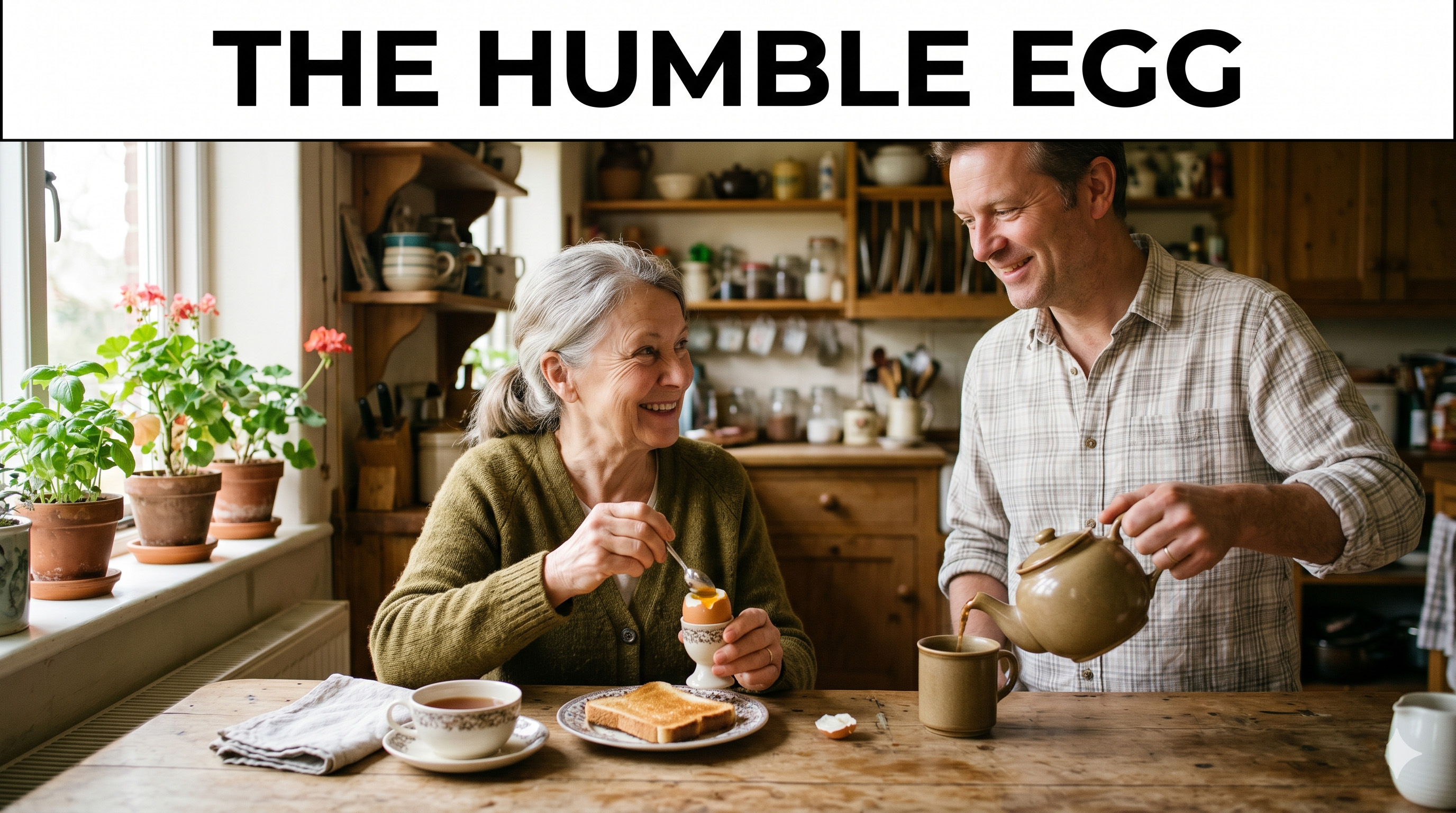
This is where the humble egg deserves much more respect than it often receives.
The egg is gentle in all the ways that matter. It is soft, easy to chew, and easy to swallow. For an older adult who is tired by dense or dry foods, that alone can make a world of difference. It asks very little of the mouth, the jaw, or the appetite. A scrambled egg, a boiled egg, or a simple omelet can feel manageable even on days when energy is low.
It is also one of the highest-quality proteins available. Eggs contain all the essential amino acids the body needs, which makes them especially valuable when every bite counts. For an older adult eating smaller portions, the quality of food matters just as much as the quantity. An egg may seem simple, but it carries real nourishment. It is a small food with serious strength behind it.
There is also something deeply comforting about eggs. They are familiar. They belong to ordinary life. They do not feel like a treatment or a special diet. They can be served warm and softly, with toast, rice, vegetables, or soup. They fit breakfast, lunch, or dinner. They can be offered in ways that feel homey and reassuring rather than medical or forced. That matters more than people realize. Older adults are much more likely to eat foods that feel welcoming.
The Gift of Simplicity
Perhaps one of the greatest gifts of the egg is the peace of mind it brings to the home. Eggs keep well in the refrigerator, often for weeks. That means there is almost always something nourishing on hand. There is less worry about food spoiling after a day or two. Less pressure to cook an elaborate meal when everyone is tired. Less guilt when plans change. A carton of eggs in the fridge is a quiet kind of security.
The simplicity matters for caregivers, but it also matters for the older adult. Not every parent wants to be cooked for at every meal. Many still want the dignity of feeding themselves. That sense of ability is precious. Boiling an egg or making a quick omelet takes only a few minutes and very little effort. It does not require standing in the kitchen for long. It does not ask the person to manage a complicated recipe. It offers a real chance to nourish themselves without exhaustion or fear of getting something wrong.
A Note on Heart Health
Clinical Notice: Of course, many families still carry an old concern in the back of their minds: cholesterol. For years, eggs were treated with suspicion. That fear has softened as nutrition science has become clearer. For most older adults, an egg can absolutely be part of a healthy diet. In fact, the danger of under-eating, muscle loss, weakness, and frailty is often far more urgent than the cholesterol in an egg. A senior who is losing strength needs nourishment, not fear at the breakfast table. That said, every person is different. If an older adult has a specific heart condition, a history of cardiovascular disease, or has been given special dietary instructions, it is wise to speak with their doctor or dietitian for personal guidance.
A Quiet Protector
Caring for an aging parent is rarely about grand gestures. More often, it is about noticing the small things that make daily life easier, safer, and kinder. It is about choosing foods that truly get eaten. It is about protecting strength in gentle ways. It is about easing fear, both for the person at the table and for the one who loves them.
The egg may look modest, but in many homes it is a quiet protector. It helps guard muscle. It supports balance. It softens the stress of mealtime. It offers comfort, nourishment, and a little more independence. Sometimes the most powerful care does not arrive with fanfare. Sometimes it is waiting in the refrigerator, simple and ready, asking almost nothing while giving so much.