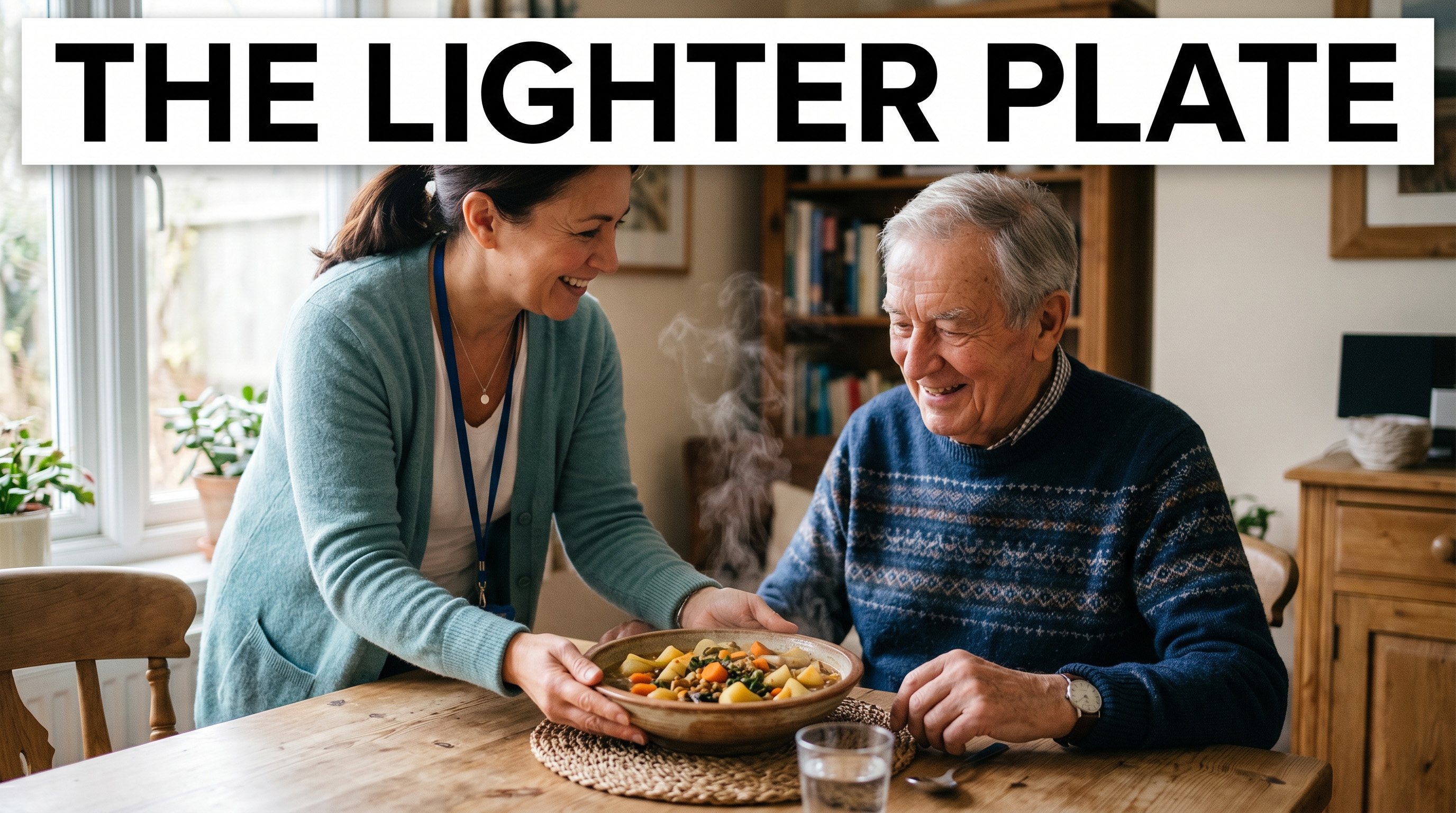
For many older generations, a "real meal" has meant a plate centered around meat: a pork chop, roast beef, steak, sausage, or chicken cooked in a way that carries memory and comfort. Meat can symbolize care, prosperity, and family tradition. Changing the plate can feel emotionally difficult, even when the body has begun asking for something gentler.
Later in life, the same familiar meal may feel different. A dinner that once felt strengthening can leave an older adult sleepy, bloated, constipated, or uninterested in the next meal. This is not weakness. Aging often brings smaller appetites, dental changes, lower activity, medication effects, and slower bowel habits. The digestive system may simply become less forgiving.
A lighter plate is not a rejection of meat. It is a practical act of comfort. Smaller portions of dense animal protein, balanced with soft cooked vegetables and gentle plant proteins, can help older adults eat with less strain and more pleasure.
The Heavy Toll of Tradition
A large piece of beef or pork can be satisfying, but it can also demand a great deal from an aging body. Dense meats require more chewing and may sit heavily after a meal. For an older adult with dry mouth, dentures, fatigue, reflux, or reduced appetite, dinner can quietly become work.
Meat-heavy meals also tend to be low in the one nutrient the bowel often needs most: fiber. Plain meat provides protein, iron, zinc, and other nutrients, but it contains no dietary fiber. When a plate is built mostly around meat, gravy, white bread, or refined starches, the meal may fill the stomach without helping the bowel move comfortably.
The shift can be gentle. Meat can move from the center of the plate to a smaller supporting role. A stew can include a little shredded chicken with carrots, potatoes, greens, and beans. A familiar casserole can use lentils beneath mashed sweet potato.
The Silent Struggle
Constipation deserves to be discussed with dignity. It is common in later life, and it can be painful, frightening, and lonely. Some older adults avoid mentioning it because the subject feels embarrassing. Families may not notice until appetite drops, sleep worsens, or discomfort becomes severe.
Several factors can contribute: reduced fluid intake, less movement, changes in routine, medical conditions, and common medications. Food matters too. Without enough fiber, stool can become hard, dry, and difficult to pass.
Fiber is one of the quiet protectors of later-life comfort. Fruits, vegetables, beans, lentils, peas, oats, and whole grains help add bulk and hold water in stool. That support can make bowel movements easier and more regular. For an older adult living mostly on tea, toast, meat, and small snacks, soft plant foods can bring real relief.
The change should usually be gradual. A sudden increase in beans, bran, or raw vegetables may cause gas or bloating. Soft cooked vegetables, oatmeal, peeled fruit, lentil soup, and mashed beans can be kinder starting points. Fiber also needs fluid, so soups, stews, warm drinks, and water-rich foods matter. Persistent constipation, bleeding, unexplained weight loss, severe pain, or a major bowel change should always be reviewed by a health professional.
Redefining Protein
Reducing large portions of meat does not mean losing protein. Protein remains vital in older age because it supports muscle, strength, healing, and resilience. The question is not whether protein matters. The question is which protein sources are easiest for the aging body to handle.
Well-cooked lentils, beans, peas, chickpeas, tofu, soy foods, eggs, yogurt, fish, and tender poultry can all help support protein intake. Plant-based proteins offer a two-for-one benefit: they provide protein along with the dietary fiber the aging gut often needs.
Texture matters. Whole chickpeas may be tiring for someone with chewing fatigue, but hummus may feel easy. Beans may feel dry on a plate, but soothing in soup. Lentils can soften into a creamy stew. Split peas can become a warm, spoonable meal. Soft, moist, flavorful food can protect both nourishment and dignity.
The Caregiver's Advantage
Plant-forward cooking can also ease the burden on caregivers. Large cuts of meat are often expensive, time-sensitive, and unforgiving. They can become tough, dry, or unsafe if storage and reheating are not handled carefully. They may require precise timing and close attention.
Soft plant-forward meals are more flexible. A pot of lentil soup can feed several days. Roasted root vegetables can become a mash or soup. Bean stews, vegetable bakes, split pea soup, and soft casseroles can be cooked in batches, portioned, frozen, and reheated without losing comfort. These meals are often budget-friendly and easier to adapt when appetite changes.
They can also help when chewing or swallowing becomes a concern. Moist, soft meals are often easier than dry meat. A caregiver can add broth, mash vegetables, or blend a portion without making the meal feel childish. The food can remain warm, familiar, and respectful.
Eating With Less Burden
Eating less meat is not a restriction or a punishment. It is a release from digestive fatigue. It allows an older adult to finish a meal without needing to recover from it.
A lighter plate honors the body as it is now. It keeps warmth, flavor, and protein, while adding softness, fiber, and ease. The best meal in later life is not always the richest plate. Often, it is the meal that leaves the body comfortable, the mind calm, and the table still inviting.
Sources and References
- National Institute on Aging: Guidance on constipation, fiber-rich foods, fluids, and older adult meal planning.
- National Institute of Diabetes and Digestive and Kidney Diseases: Information on fiber needs, gradual fiber increases, and constipation prevention.
- Mayo Clinic: Clinical overviews of constipation symptoms, causes, high-fiber eating, fluids, activity, and warning signs.
- Harvard Health Publishing: Research on protein needs in aging and the use of legumes as dual sources of protein and fiber.