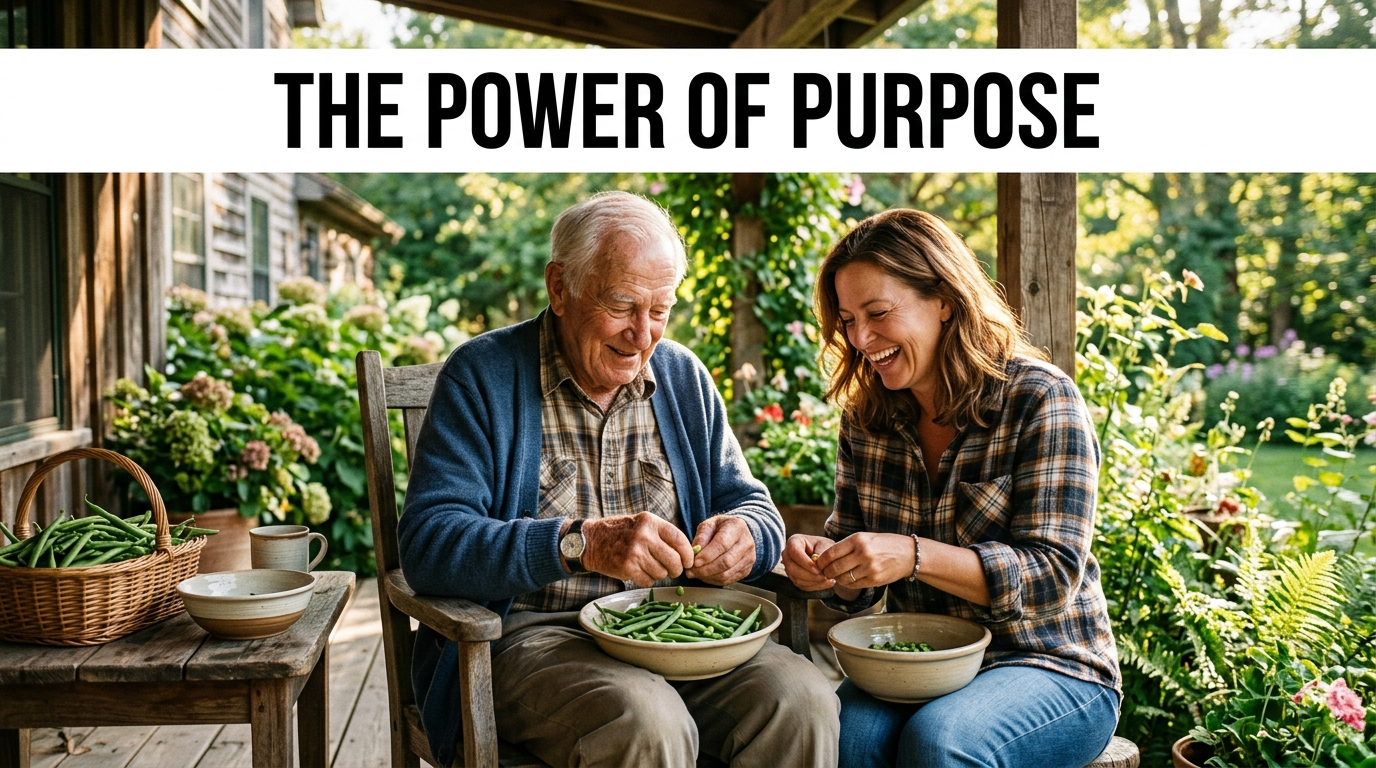
On the Nicoya Peninsula of Costa Rica, longevity has a human face. It appears in elders who rise early, greet neighbors, help with food, and remain part of the household's daily rhythm. Nicoya is often named among the world's Blue Zones, places associated with unusual numbers of long-lived residents. Its centenarians have attracted attention for food, movement, and family bonds.
Yet the deeper lesson is not a miracle recipe or a secret gene. It is the Nicoyan idea of "Plan de Vida," a reason to live that keeps an older adult oriented toward the next meaningful act. Blue Zones research describes this sense of purpose as a defining feature of Nicoyan longevity.
The Nicoyan Exception
The long lives of Nicoyan elders are not built on luxury. Many grew up with simple homes, modest meals, physical work, and a culture where age did not automatically mean withdrawal. Older adults remained near children, grandchildren, gardens, kitchens, and porches. Life continued to ask something of them.
That detail matters. A person does not stop needing meaning after retirement, illness, widowhood, or frailty. The body may slow, but the need to matter remains alive. "Plan de Vida" gives shape to the day. It can be as visible as tending a garden or as quiet as blessing a meal, telling a child a story, sorting ingredients, or remembering how a tradition is done. Purpose does not need to be grand. It only needs to be real.
The Trap of Over-Caring
Modern caregiving often begins with tenderness. A family sees an aging parent struggling with balance, fatigue, memory, or pain, and the first instinct is to remove every burden. Someone else cooks. Someone else cleans. Someone else folds laundry, carries groceries, and makes decisions. This help comes from love.
Still, the emotional effect can be painful. When every task is taken away, the older adult may slowly become a guest in a home that once depended on that person. The role shifts from contributor to observer, from family member with responsibilities to patient receiving services. Safety improves in one sense, but dignity may quietly shrink.
Falls, medication mistakes, exhaustion, and unsafe cooking require attention. The lesson is gentler than total independence. Protection does not have to mean total replacement. A task can be adapted rather than erased. A chair can be placed near the counter. The heart of care is preserving as much agency as possible while keeping the person safe.
The Medicine of Being Needed
In Nicoya, older adults are often expected to remain useful in ways that fit their strength. An elder may sweep the porch, shell corn, sort beans, fold laundry, watch grandchildren, offer advice, or keep track of family rituals. None of these acts would look dramatic from the outside. Yet they can matter deeply.
Being needed gives the day a reason to begin. It invites attention, memory, movement, and social connection. The hands work. The eyes scan. The mind remembers a sequence. The body bends, reaches, stands, and rests. The older adult receives a message that no device can provide: presence still matters here.
Research supports this human intuition. A JAMA Network Open study of adults over 50 found that stronger purpose in life was associated with lower mortality. Other research has linked purpose with protection against cognitive decline in older adults. These findings do not make purpose a cure, and no family should treat meaning as a substitute for medical care. They do suggest that psychological belonging is part of health.
Social connection carries a similar lesson. The National Institute on Aging notes that loneliness and social isolation are associated with risks to physical, mental, and cognitive health in older adults. Connection is not only conversation. It is also participation, the feeling that a person has a place at the table and a role in the rhythm of the home.
The Humble Plate
Food still matters in Nicoya. Traditional meals often include the Mesoamerican "Three Sisters": corn, beans, and squash. These foods are simple, fiber-rich, familiar, and filling. They support steady energy for walking, cooking, visiting, gardening, and helping. Blue Zones descriptions of Nicoya often highlight these staples as part of the region's traditional pattern of eating.
The lesson is not that every household must copy Nicoya exactly. Food is cultural, personal, and shaped by budget, health conditions, teeth, appetite, and access. The kinder message is that nourishing meals can be humble. Beans, vegetables, soups, soft grains, stews, and simple shared foods can honor both health and dignity.
Care That Leaves Room for Purpose
The story of Nicoya asks families to widen the meaning of care. Care is not only preventing harm. It is also protecting identity. An aging parent may need a handrail, a medication reminder, a softer chair, or help with transportation. That same parent may also need to feel useful, consulted, and trusted with something small.
A simple request can carry profound respect. A family might ask an older adult to fold napkins, taste the soup, water one plant, choose music for dinner, tell a grandchild about childhood, or sort family photos. The task itself may be modest. The message is not modest at all. It says that age has not erased belonging.
Nicoya does not teach that aging is easy. It teaches that dignity survives best when older adults remain part of daily life. The strongest care protects the body without silencing the person. Asking an aging parent for help with a simple task may be one of the most loving acts a family can offer.
Sources and References
- Blue Zones: "Nicoya, Costa Rica" (for background on the lifestyle and longevity of the region).
- JAMA Network Open (Alimujiang et al., 2019): Association Between Life Purpose and Mortality Among US Adults Older Than 50 Years.
- American Journal of Geriatric Psychiatry (Kim et al., 2019): Purpose in Life and Incidence of Cognitive Impairment.
- National Institute on Aging: Resources and research detailing the impact of social isolation and loneliness on cognitive and physical health.
- USDA National Agricultural Library: Information regarding the nutritional benefits of the "Three Sisters" (corn, beans, and squash).