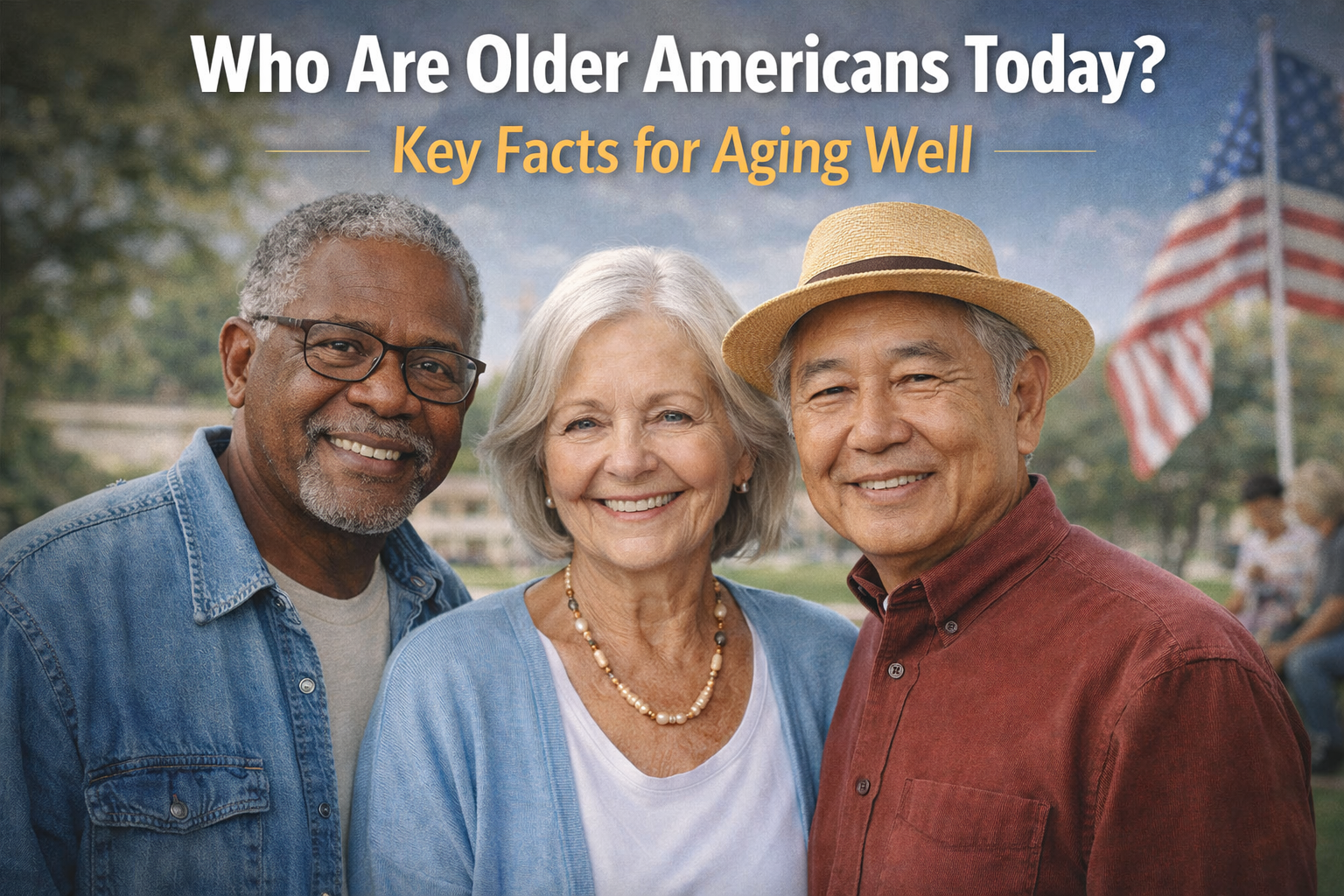
The face of aging in the United States is changing fast. Older adults are one of the nation’s fastest-growing population groups, with tens of millions living active, independent lives while also facing serious challenges related to health, income, and long-term security. Understanding these realities is essential to supporting healthy, fulfilling aging for everyone.
A Growing and Diverse Population
In 2022, about 57.8 million Americans were age 65 or older, a number expected to continue rising as baby boomers age. By 2040, an estimated 78.3 million Americans will be in that age group, making up a larger share of the country’s population.
Older adults today represent diverse backgrounds. Approximately one-quarter are from racial or ethnic minority communities, reflecting broader shifts in America’s demographic makeup.
Living arrangements vary widely, too. While most older adults live with a spouse or partner, around 28 percent live alone, a figure that can affect social connection, daily routines, and access to support.
Health Trends, Longer Lives, More Chronic Conditions
Thanks to improvements in medicine, public health, and lifestyle, older Americans are living longer. A typical 65-year-old today can expect nearly 19 more years of life on average.
Yet while longevity has increased, many older adults manage chronic health conditions:
- Nearly 93 percent have at least one chronic condition
- Common conditions include arthritis, diabetes, and heart disease
These health realities don’t just affect individuals, they influence independence, quality of life, and the need for ongoing health care management.
Economic Realities, Insecurity and Inequality
Financial stability in later life is far from guaranteed. In 2022, the median income for older Americans was just under $30,000, and more than 10 percent lived below the official poverty line.
Economic insecurity can hit especially hard for people living alone, women, and older adults of color, with poverty rates far higher in some groups compared to others.
Even beyond official poverty measures, many older adults struggle to cover basic costs like housing, food, utilities, and health care. In fact, up to 80 percent of older Americans are unable to withstand a financial shock, such as the need for long-term care or a loss of income.
These economic pressures force some older adults to stay in the workforce longer, not just for fulfillment but out of financial necessity.
Food Insecurity and Nutrition Challenges
Economic insecurity also affects nutrition. In 2022, about 9 percent of households with an older adult experienced food insecurity, meaning they had difficulty accessing enough healthy food. That rate climbed higher for those who live alone.
Food insecurity undermines health, increasing risks for conditions like diabetes and depression and weakening overall wellbeing, a serious public health concern as the population ages.
Work, Engagement, and Meaningful Activity
Work remains an important part of life for many older adults. In 2023, more than 11 million Americans age 65 and older were still working or seeking employment, driven by both economic needs and a desire to stay active and connected.
Employment can play a vital role in mental health, social engagement, and purpose, elements that organizations like Agefully emphasize in supporting older adults’ daily structure and identity.
The Critical Role of Caregivers
Family and informal caregivers are an essential part of aging support. Recent data show that 37 million caregivers provided unpaid care to an older adult, often while juggling jobs, children, and other responsibilities.
Older adults also play caregiving roles themselves. In 2022, more than 1 million grandparents age 60 and older were primarily responsible for raising grandchildren, illustrating the complex social roles older Americans hold.
NCOA’s Vision, Aging With Dignity
The National Council on Aging (NCOA), a leading voice for healthy aging, works to ensure every older adult has the opportunity to thrive regardless of income, race, gender identity, or ZIP code. Their efforts include:
- Advocating for public policy change
- Promoting chronic disease self-management and falls prevention
- Connecting older Americans with affordable health care and benefits
- Raising awareness of tools and resources that support aging in place
Looking Ahead
The story of aging in America is one of both progress and challenge. Older adults are living longer, contributing to families and the workforce, and enriching communities. But many also confront chronic health conditions, economic insecurity, and limited access to the resources they need.
Supporting healthy aging, whether through stronger safety nets, better access to benefits, or daily-living support like what Agefully provides, is not just a policy issue, it’s a shared commitment to dignity and wellbeing for millions of Americans.