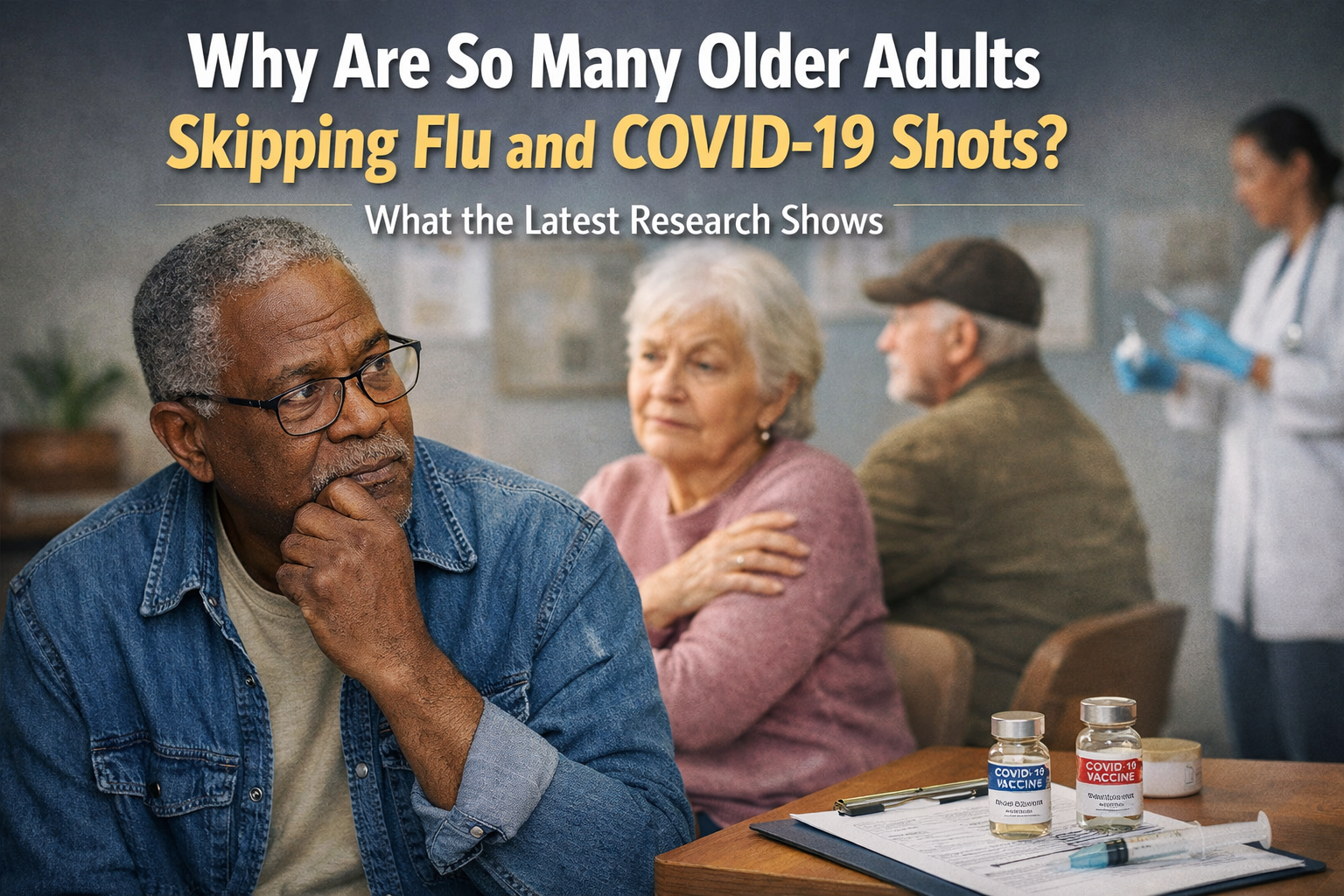
As another challenging respiratory virus season unfolds, health experts are raising alarms that a large share of middle-aged and older adults are not up to date on their flu and COVID-19 vaccinations, even though these shots are proven to reduce severe illness, hospitalization, and death for people ages 50 and older.
Vaccination Rates Are Lower Than You Might Think
According to the University of Michigan National Poll on Healthy Aging, about 42% of adults age 50 and older had neither the updated flu vaccine nor a recent COVID-19 shot in the past six months, despite both viruses circulating widely this season.
The poll also looked specifically at COVID-19 vaccination history: nearly half (49%) of adults over 50 reported it has been more than a year since their last COVID-19 vaccine dose, and 15% said they’ve never had one at all.
“I Don’t Think I Need It” Is the Top Reason
The leading reason older adults gave for avoiding updated vaccines was simple:
Many didn’t think they needed them. Roughly 28–29% of respondents who skipped a flu or COVID-19 shot recently said that’s their main reason.
This matters because aging immune systems benefit especially from regular vaccine updates, which help “remind” the immune system about how to fend off viruses that change over time.
Other Reasons Older Adults Skip Shots
Beyond perceived lack of need, other common reasons include:
- Worries about side effects, reported by about 19% (flu) and 27% (COVID-19).
- Doubts about effectiveness, cited by around 18–19%.
- Smaller numbers said they just didn’t think of it, wanted to wait, or mentioned time, cost, insurance, or availability issues.
These findings highlight that, in many cases, what’s holding older adults back isn’t lack of availability, but misunderstandings or concerns about vaccines.
Age and Vaccination Patterns Vary
The poll also found differences by age group:
- Those 75 and older had the highest updated vaccination rates.
- Adults 50–64 were much less likely to be up to date on both flu and COVID-19 shots.
This pattern suggests a need for targeted communication efforts tailored to people in their 50s and early 60s, who may not see themselves as at risk despite having conditions like high blood pressure, diabetes, or obesity that raise their chances of serious illness.
It’s Still Not Too Late to Get Protected
Experts emphasize that even later in the season, adults can still benefit from vaccination. Updated COVID-19 vaccines may include recommendations for additional doses depending on age and immune status, and flu vaccines continue to provide important protection throughout the season.
What This Means for Older Adults and Caregivers
The data underscore that education and clear communication matter. Many older adults don’t refuse vaccines out of strong opposition — they simply underestimate how much benefit they can receive. Evidence shows that up-to-date flu and COVID-19 shots significantly reduce the risk of severe outcomes, especially for people over 50 and those with chronic health conditions.
For caregivers, family members, and health care providers, this means:
- Highlighting personal benefits (such as preventing serious illness), not just population statistics.
- Addressing common concerns about side effects and effectiveness with empathy and clarity.
- Encouraging annual vaccination as a habit, like routine check-ups or health screenings.
In short, a supportive conversation may be just what’s needed to help older adults make informed decisions that protect their health and wellbeing.